
The Truth About Heat Damage: Do You Need to Avoid Heat for Healthy Hair?
Avoiding heat tools has become one of the most common pieces of advice for achieving healthy hair. But is giving up heat altogether the right solution? While excessive heat without protection can absolutely cause damage, the idea that all heat is harmful, or that all heatless styling is automatically healthier, is an oversimplification. So in this post, I’ll explain what actually causes heat damage, how different styling methods affect your hair, and what you can do to keep your hair healthy, whether you prefer heat styling, heatless styling, or a combination of both.
After 18 years behind the chair, I’ve seen firsthand that heat alone does not determine the condition of someone’s hair. I’ve worked with clients who rarely used heat tools and still had significant damage, as well as clients who regularly used heat tools and maintained incredibly healthy hair. Likewise, I’ve seen heatless styling contribute to breakage and hair loss when they put too much tension on the hair.
Why Heat Damage Happens
Heat tools have earned a bad rep for a reason. When used incorrectly, they can cause some of the most noticeable forms of damage throughout the hair shaft from scalp to ends:
Heat damage can cause:
- Breakage and flyaways: One of the most common signs of heat damage is those short, broken, flyaway pieces sticking out along the hair shaft. That’s breakage traveling up your hair.
- Difficulty retaining length: Heat damage can make it difficult to keep length and grow hair longer. Hair may appear “stuck” at the same length when it’s constantly splitting and breaking off the ends.
- Faded hair color: Heat styling can cause the color molecules to fade more quickly, especially with excessive use of hot tools. If you invest time and money into your hair color, heat without protection can shorten how long your color lasts.
- Dryness: When the cuticle is damaged from heat, the outer layer of hair is left open and becomes easier for moisture to escape from the inner layers. This leads to dryness and hair that feels brittle.
Heat damage is caused by:
- Using temperatures that are too high: Excessive heat can burn the hair and damage the cuticle, which leaves the inner layers vulnerable to damage.
- Using irons or blowout brushes too frequently: Repeated exposure without giving your hair time to recover can lead to dryness, split ends, and increased breakage. It’s better to space it out rather than using irons every single day.
- Skipping heat protection: Heat protectants significantly help reduce the amount of damage caused by heat tools. The hair is susceptible to damage from a single use without thermal protectants.
- Applying heat to already damaged hair: Bleached, chemically treated, or naturally fragile hair can become damaged more quickly.
The problem is that heat damage is often over-simplified into “heat is bad for your hair”. While this is a good forethought, you can maintain healthy hair using heat tools as long as you’re using them properly.
How To Use Heat Tools With Less Damage
When people talk about heat damage, they often group all heat tools together. However, not all heat tools affect the hair in the same way. The biggest difference comes down to whether the tool applies direct or indirect heat.
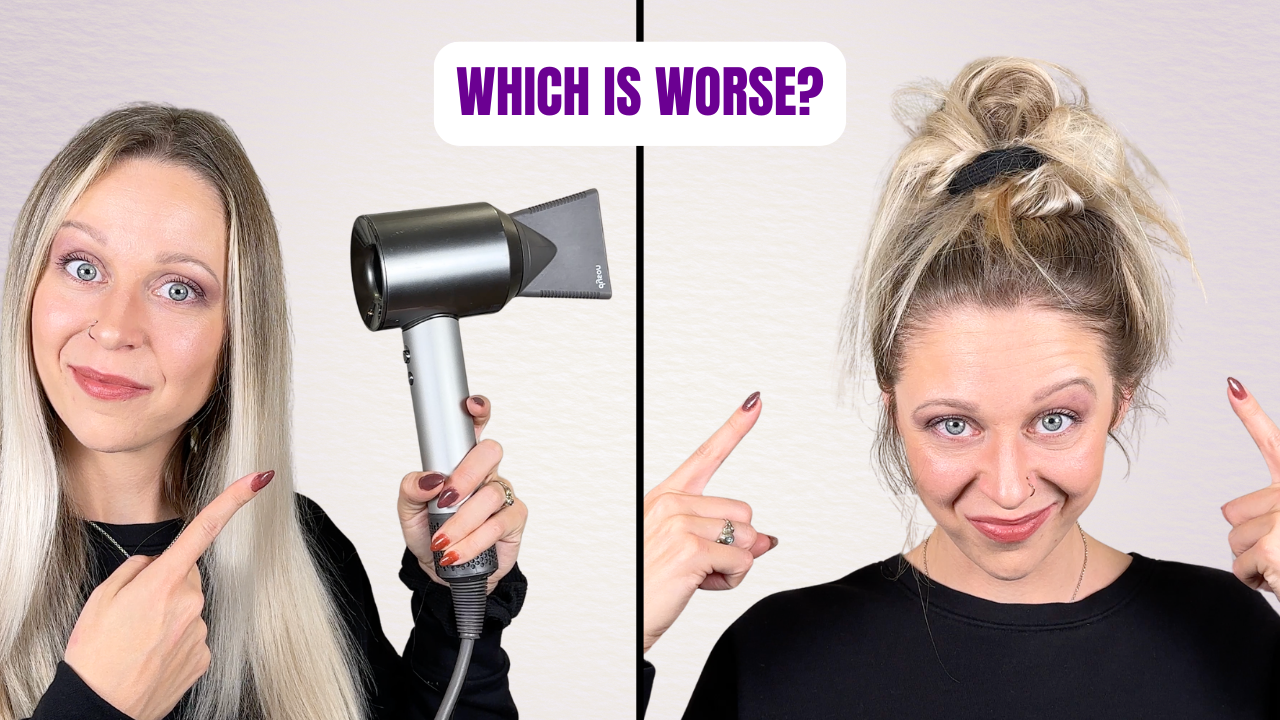
Tools that use direct heat (irons, blowout brushes, etc) can be more damaging because the hot surface is pressed directly against the hair. A traditional blow dryer works differently because it uses indirect heat, with hot air rather than a hot metal plate pressed against the hair.
I suggest alternating between using heat tools and not using them. If your hair isn’t too thick, let it air dry some days, especially if you don’t have much going on, and then save using heat tools for the days you do need your hair styled.
Additionally, if you can wash your hair less often, you’ll be able to limit the amount of heat styling needed without changing anything else. In this guide, I cover how often to wash your hair based on your hair type for healthy hair and scalp.
But now let’s cover a few tips on how you can avoid damage on the days you do use your heat tools.
***Since I’m sharing the hair products that I love to use with you guys, my posts may include affiliate links to these products. If you take action and purchase a product through clicking one of my links, I’ll make some commission money from it at no extra cost to you. This enables me to be able to continue giving you awesome hair tips, so thanks! ***
Blow-drying tips for less damage:
When used correctly, blow-drying can be a much gentler way to style your hair while avoiding some of the intensity of direct-contact heat tools. A round brush can help create volume, movement, and a smoother finish without needing to go back over every section with an iron.
Blow-drying the hair promotes a healthy scalp. Especially if you have very thick hair that takes a long time to dry, air drying may not be a good option for you. Moisture sitting on the scalp for an extended period of time can create a breeding ground for fungus and dandruff.
- Let hair air-dry some first: Let your hair air-dry for an hour or so before blow-drying it. This allows a good amount of the moisture to evaporate, requiring less time with the blow-dryer.
- Use a low to medium temperature: The highest setting is often unnecessary, especially for fine, fragile, or chemically treated hair. More heat does not automatically dry your hair faster.
- Keep the dryer moving: Avoid concentrating heat on one section for too long, as prolonged exposure can increase the risk of damage.
- Maintain distance: Holding the dryer too close to your hair can expose it to more intense heat than necessary, especially if using a ceramic brush. Keeping some space between the nozzle and your hair helps distribute the heat more evenly.
- Use the cool shot: There is a reason most hair-dryers have this button. Finishing each section with cool air can help cool the hair, reduce frizz by sealing the cuticle, and set the shape of your style.
- Use a boar bristle brush: Boar bristle brushes are the most gentle on your hair. The handle doesn’t get as hot as ceramic or metal because it’s made of wood, and the bristles promote more shine than nylon.
Flat iron tips for less damage:
One of the biggest misconceptions about heat styling is that higher temperatures create better results. While higher heat can sometimes make styling faster, it also increases damage to the hair. The goal is to use the lowest temperature that effectively styles your hair.
- Choose tools with adjustable temperature settings: Avoid irons that only have vague “low,” “medium,” and “high” settings. A tool with a temperature gauge allows you to choose a temp that is ideal for your hair type and condition.
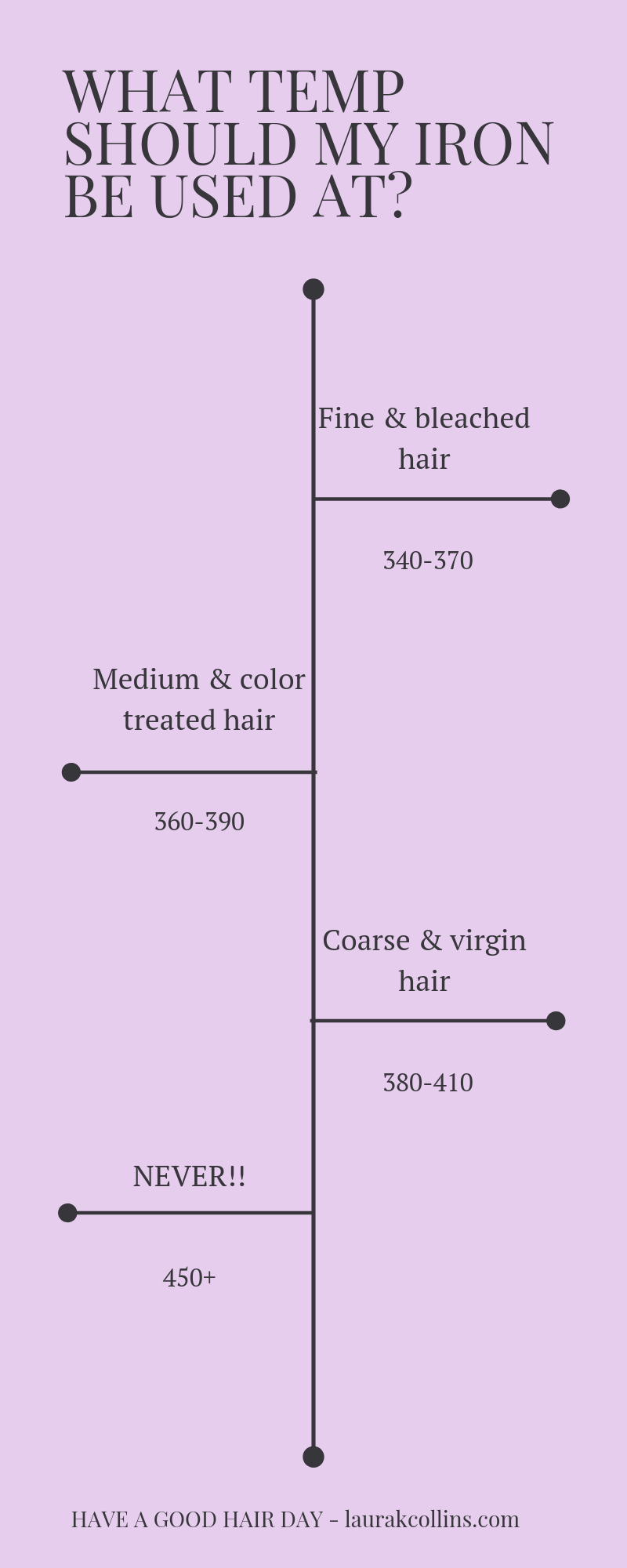
- Use the lowest effective temperature: You do not need to use 450°F to get results. Start lower and increase the temperature only if needed. (Recommended temps for hair type in image below).
- Take smaller sections: Taking sections that are too large can require multiple passes to get the desired result, increasing the amount of heat exposure. Smaller sections allow the iron to work more efficiently.
- Keep the iron moving: Never pause the iron on your hair. If you need to, practice with it cold to get the hang of your movements (especially if learning flat iron curls) so you don’t risk pausing in one spot.
- Always use heat protection: Heat protectants are one of the biggest ways to prevent unnecessary heat damage to the hair.
The right heat setting depends on several factors, including your hair texture, condition, and whether it has been chemically treated or not.
To dive deeper into what heat tools to use and what heat tools to avoid, see my guide on the best blow dryers, irons, and blowout brushes and learn what brands are best for your hair type.
How Heat Protectants Prevent Heat Damage
Heat protectants are one of the biggest precautions you can take to keep your hair healthy when using heat tools. They create a protective barrier between your hair and the heat, helping reduce moisture loss and minimize the damage caused.
An iron should never touch your hair prior to it being sprayed with a thermal protectant. Even just one use without protection can cause heat damage.
I suggest using a leave-in conditioner or a hair serum prior to blow-drying. And an aresole spray prior to ironing. This makes sure all of your bases are covered.
- Pravana Intense Therapy Leave-In Conditioner – Lightweight detangler that protects from heat, chlorine, and UV rays as well as adds moisture. This one is best if your hair is fine/normal, it won’t weigh it down as much as a serum will.
- Aquage Silkening Oil Treatment – Hair serum used to smooth frizz, protect the hair from heat damage, and reduce blow-dry time. This one is best if you have curly, dry, or frizz-prone hair.
- Aquage Beyond Shine – Thermal protectant that adds shine, increases iron performance for fewer passes, and protects hair from iron damage.
When You Should Avoid Heat Styling
While heat styling is not inherently bad, there are situations where it should be avoided:
- Severely damaged hair: If your hair is damaged from bleaching or other chemical treatments, you should avoid heat styling until it’s regained its integrity.
- Pastel, white, or vivid hair color: Pastel and bright vivid hair colors are the quickest to fade. Since heat styling can promote fading and yellow the hair, it should be avoided if you have a high-maintenance color.
- Freshly colored hair: Even if your hair isn’t pastel or vivid, heat tools can noticeably pull color from the hair. So if you just had your color done, it’s best to avoid heat tools until it isn’t so fresh.
- Relaxed or permed hair: Relaxers and perms are damaging on their own, and if you’ve had one of them done, you shouldn’t need to style your hair using heat tools.
- Fragile hair: If you have naturally fragile hair or have recently experienced hair loss, you should avoid heat tools until your hair is healthy and strong.
While heat is not the only factor that affects the condition of your hair, avoiding it when your hair is already susceptible to damage will reduce the risk of making it worse.
Is Heatless Styling Actually Better for Your Hair?
Heatless styling can be a great option if you’re trying to reduce heat damage and promote healthy hair. Braids, low ponytail styles, and other heatless hairstyles can create waves, texture, and volume without the risk of heat damage.
However, heat-free does not automatically mean damage-free.
Some popular heatless styling methods, like overnight curlers or sock curls, can cause damage if they’re tight. If it pulls on your hair and scalp, creates excessive tension, or requires a lot of friction (messy buns), it can cause breakage or even traction alopecia, especially for fragile or already damaged hair.
To learn more about why messy buns are bad for your hair and to see several low ponytail tutorials, see my guide here.
Heatless Styling Options
Not every method will work for everyone. We all have different hair types and textures, so what works for you may not work for your best friend. Choose the option that best suits your skills, lifestyle, and hair type.
The 5 best ways to style your hair without using heat are:
- Air drying: Great for minimizing heat exposure, especially with a leave-in conditioner, serum, or defining gel, or if you get keratin treatments.
- Sleep with hair 80–90% dry: This can help reduce frizz compared to air drying throughout the day. However, sleeping with very wet hair is not recommended if it’s more than 25% damp. This can cause mildew and bacterial growth
- Low ponytails: Low ponytails put much less tension on your hair than high ponytails or buns because gravity is working with you, not against you.
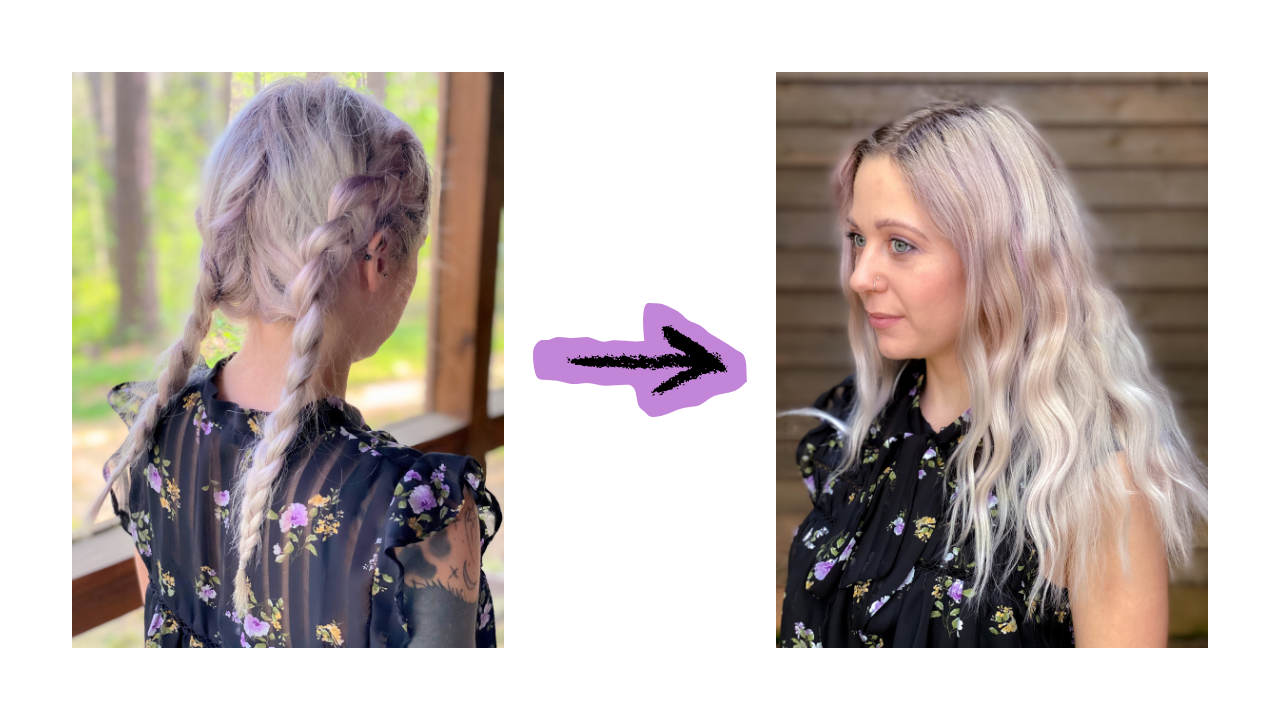
- Braids: One of my favorite ways to create natural-looking waves without heat (pictured above). I wear the braids for a day, then the waves for a day before rebraiding it agian.
- Heatless curling sets: A good option if you struggle to braid your own hair; just avoid wrapping them too tightly.
If you are interested in trying a heatless curler set, these are most recommended:
- Heatless Curling Rod Headband – Velvet headband that will allow you to create heatless waves while you sleep.
- Curling Rods – Individual curling rods for creating heatless waves for shorter hair as well as tighter curls than the headband.
The Healthiest Approach to Heat Styling
Most advice suggests “avoid heat if you want healthy hair”. And while that may be the best approach for severely damaged or over-processed hair, it’s not a one-size-fits-all rule.
After many years as a hairstylist, I’ve found that healthy hair is rarely the result of avoiding heat tools entirely. Instead, it’s the result of consistently making good choices. Using the right temperature for your hair type, applying a heat protectant, limiting unnecessary heat styling, and incorporating heatless styles when they make sense can all help you maintain healthier hair over time.
If you enjoy using heat tools, you don’t have to give them up. Blow drying, curling, or straightening your hair occasionally does not automatically mean you’re damaging it beyond repair. Likewise, if you love heatless styling, remember that tension and friction can also affect the health of your hair just as much as heat can.
The goal isn’t to fear one method or another. It’s to understand how each one affects your hair so you can make informed decisions.
If you have any further questions for me on heat damage or heatless styling, leave them for me in the comments!
share item


Comments