
How Often Should You Get A Haircut? A Simple Guide Based on Your Hair Type
How long has it been since you last got a haircut? Since everyone’s hair is different, there isn’t a one-size-fits-all timeline. Most people’s sweet spot falls somewhere between 6–12 weeks, but your ideal haircut schedule depends on your hair type, its condition, and the style you want to maintain. In this post, I’ll break down the factors that determine how often you should get a haircut.
As a hairstylist, I get asked this question all the time. Some clients are trying to grow their hair out, while others want to maintain a specific style. Depending on your goals, you might need to trim split ends to keep hair healthy, texturize it so it lays properly, or shorten it to upkeep a particular shape.
3 Key Factors That Determine Haircut Frequency
As we go over each category, grab a pen and paper and write down the timeframe that you fit into. Then at the end, we’ll combine them all to find that sweet spot for your perfect haircut schedule.
- Hair Condition
- Hair Type (texture, density, wave pattern)
- Length & style
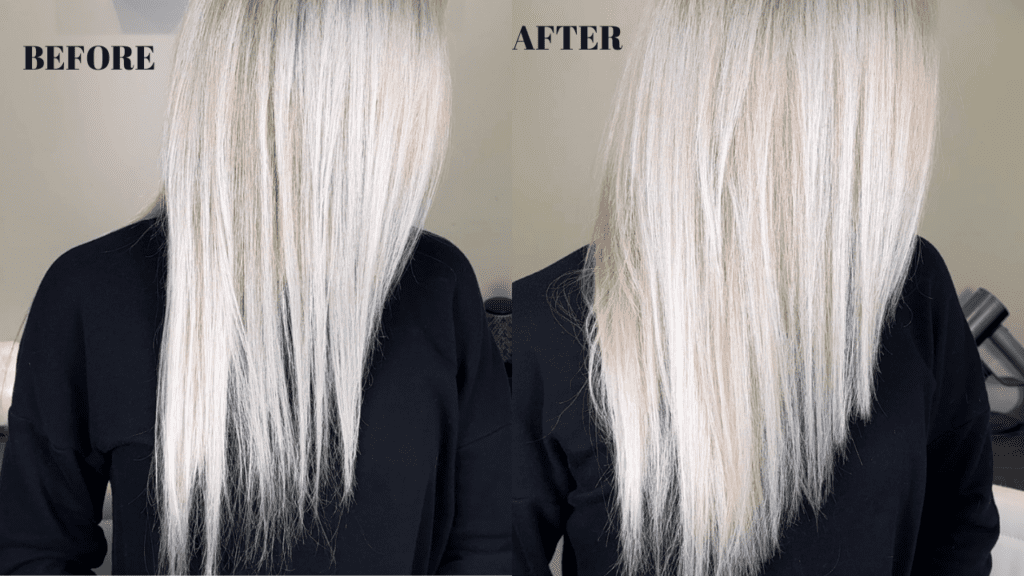
For a tutorial on how to cut your own hair like in the image above, see this post here.
1. Hair Condition
The condition of your hair plays a HUGE role in how often you need your hair cut, and that’s why I’ve listed it first.
Healthy and virgin hair doesn’t need to be trimmed as frequently as damaged, chemically treated, or over-processed hair because the ends aren’t splitting.
Coloring and bleaching, heat tools, rough brushing, the sun, and even hair ties can cause breakage that requires you to trim your ends more often.
- Damaged/bleached/frequently ironed hair: 4-6 weeks
- Chemically treated hair/sometimes ironed: 6-8 weeks
- Healthy/virgin hair: 8-12 weeks
2. Hair Type
Hair type includes density, texture, and wave pattern, all of which affect how often you need a haircut. If you aren’t sure what your hair type is, see the links below:
- Hair Density Test: Thin, Medium, Or Thick & How To Care For It
- Hair Texture Test: Fine, Medium, Or Coarse & How To Care For It
- Understanding The Wave Pattern Of Your Hair & How To Care For It
Hair Density
Thick hair generally needs to be texturized and thinned out so that the cut doesn’t lose its shape. I’ve even seen clients get extreme headaches from having too much hair. Whereas someone with thin hair doesn’t have this problem and can usually wait longer before needing to come in.
- Thick hair: 4-6 weeks
- Medium: 6-8 weeks
- Thin hair: 8-12 weeks
Hair Texture
On the contrary, fine hair typically needs to be cut more frequently than coarse hair. Fine hair is much more fragile, it splits more easily, and is all around weaker than coarse hair, even if you have a lot of it.
- Fine hair: 4-6 weeks
- Medium: 6-8 weeks
- Coarse hair: 8-12 weeks
Wave Pattern
Curly hair doesn’t normally need to be cut as frequently as straight hair, mainly because curly hair shrinks so much. As long as those curls are being well-maintained and moisturized, then you should be able to go up to twice as long without a cut, IF you wear your hair curly most of the time.
However, if you have naturally curly hair and you flat iron it every day, then you’ll need it cut much sooner to keep your ends healthy. See the first section on condition if you do iron your hair frequently.
- Straight hair: 4-6 weeks
- Wavy hair: 6-8 weeks
- Curly hair: 8-12 weeks
3. Length And Style
If you wear a short pixie, you’ll need a haircut way sooner than someone with bra-stap length hair. And if you wear bangs, you may have found that you need your bangs trimmed twice as frequently as the rest of your hair, which is normal. In this case, trim your bangs once between haircuts.
And if you’re growing your hair out, I recommend doing one good and healthy cut to be sure you’ve removed all of the split ends. Then, if you keep it in good condition, you’ll be able to go longer between cuts than if you’re trying to maintain the same length and shape.
- Pixie/short cuts: 2-4 weeks
- Bobs/mid-length cuts: 4-8 weeks
- Long cuts: 8-12 weeks
Mens Hair
Men’s hair is different because they don’t usually have damaged or chemically treated hair. So typically, the shorter the cut, the sooner they’ll need to come in.
- Skin fades/very short: 2-4 weeks
- Regular fades and short scissor cuts: 4-6 weeks
- Medium scissor cuts/below the ear: 6-8 weeks
- Long hair/shoulder or below: 8-12 weeks
Finding your perfect haircut schedule
Now that you’ve written down your averages for each category, it’s time to find your sweet spot. Here’s an example using my own hair:
- Hair Condition: 4-6 weeks
- Hair Density: 6-8 weeks
- Hair Texture: 6-8 weeks
- Wave Pattern: 6-8 weeks
- Length: 8-12 weeks
My sweet spot: 6-8 weeks
Since most of my factors fall in the 6–8 week range, with one slightly lower (4–6) and one slightly higher (8–12), I aim for a 6–8 week schedule. If I stretch beyond that, my haircut starts to lose shape, and my ends begin to split. So staying within this window keeps my hair looking healthy and well-maintained.
Tips to extend time between cuts: If you’re growing your hair out
Once you get an initial haircut, you can extend the time between cuts by doing what I like to call a “pretend haircut” or “dusting the ends.” This is when ¼ inch or less is trimmed off to keep the ends healthy as your hair grows out. For best results, have it done on dry, straight hair so your stylist can see the true length and shape of how it falls when dry.
Many stylists, including myself, offer a lower rate for these quick maintenance trims because they take much less time. But a quick tip: always come with clean, detangled hair. Greasy or messy hair can make the trim take just as long as a full cut, and your stylist won’t be able to offer the discount.
Beyond maintenance trims, your number one priority should be maintaining the health and integrity of your hair to avoid breakage and split ends. Some tips include (blog post linked for more information):
- Use Professional-Grade Products
- Perform Deep Conditioners Regularly
- Avoid Heat Styling
- Avoid Tension (messy buns)
Check out my post here for more tips on growing your hair out and keeping it in its best condition possible.
Conclusion
Knowing how often to get a haircut doesn’t have to be confusing. It all comes down to understanding your hair type, its condition, and the style you want to maintain. By considering factors like hair texture, density, wave pattern, length, and overall health, you can create a personalized schedule that keeps your hair looking its best while preventing split ends and maintaining your style.
For most people, the sweet spot falls somewhere between 6–8 weeks, but your ideal timing may be shorter or longer depending on your hair’s needs. Maintaining healthy hair in between visits through proper care, conditioning, and occasional “pretend haircuts” can also help you extend the time between trims without sacrificing the integrity or shape.
Ultimately, the best haircut schedule is one that works with your lifestyle, your hair goals, and your personal preferences. Keep track of how your hair responds, stay consistent with your routine, and don’t be afraid to ask your stylist for guidance.
Take action: Use the tips in this post to determine your sweet spot, set a schedule, and maintain healthy, beautiful hair all year round. Your next haircut doesn’t have to be a guessing game anymore, it’s all about knowing your hair and what it needs.
If you have any further questions for me on this topic, be sure to leave them for me in the comments. And as always, Have A Good Hair Day!
share item


Comments