
How to Fill Blonde Hair Before Going Darker: Is It Necessary?
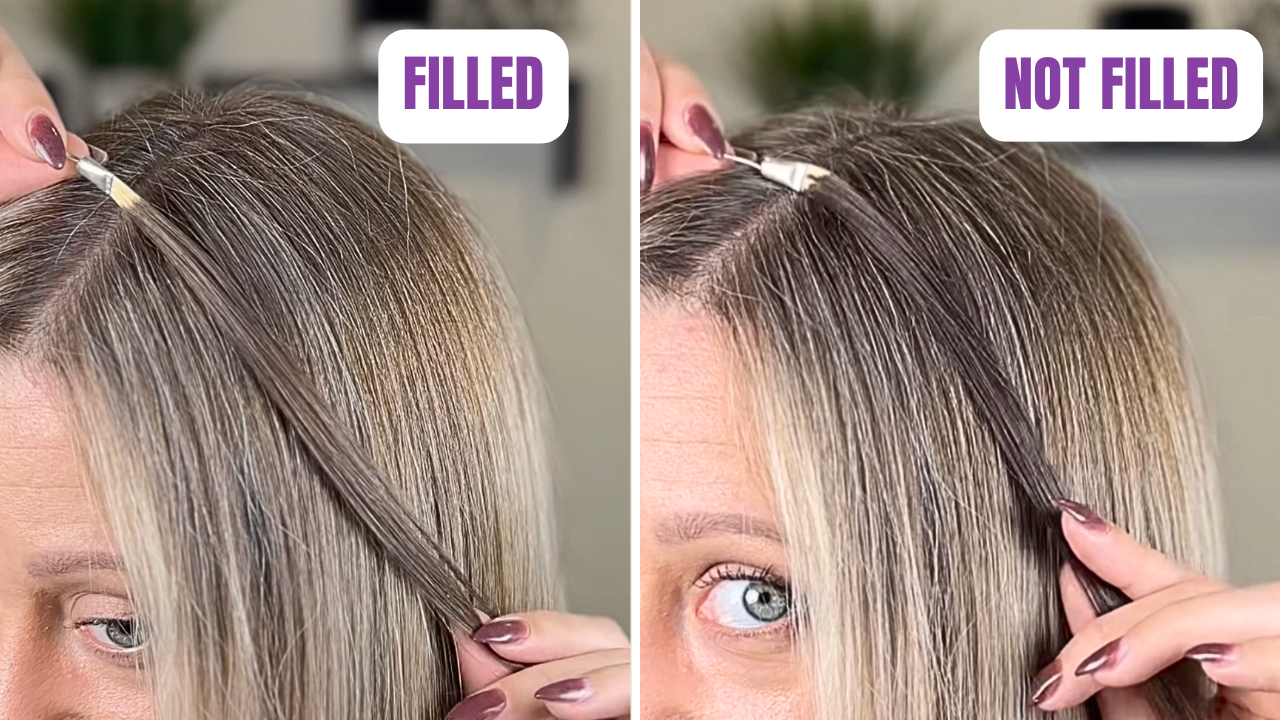
If you have blonde or heavily lightened hair and want to go darker, you’ve probably heard that you need to fill your hair first. But what does that actually mean? And more importantly, is filling blonde hair before going darker always necessary? In this post, I’ll explain what a hair filler does, when you need one, when you may be able to skip it, and how to fill blonde hair before going darker step by step with examples to show the difference.
Hair color theory teaches us that you must always fill the hair when going 3-4+ levels darker. And while filling can be an important step when taking blonde hair to brown, my professional experience has shown me that there are situations where you may prefer the unfilled hair color instead.
What Does It Mean to Fill Blonde Hair?
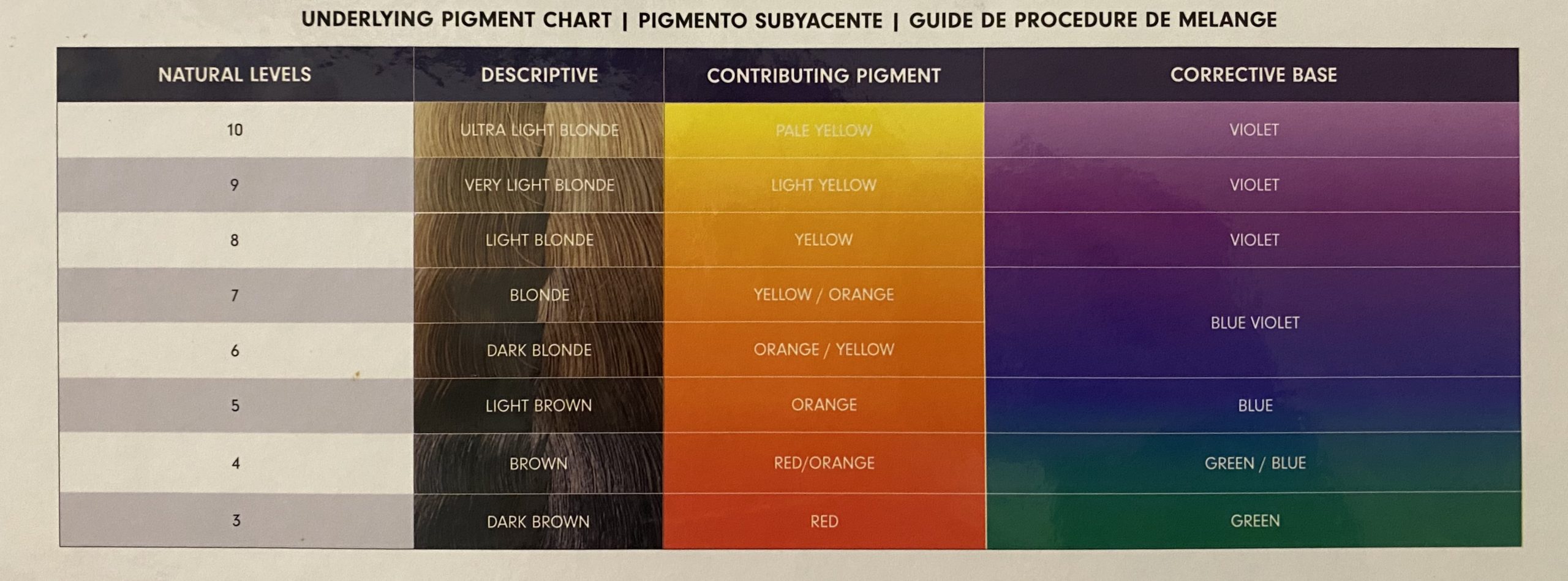
All hair naturally contains warm, underlying pigments at all levels, no matter the shade of the natural hair color. These underlying pigments become visible when we lighten the hair. This is why, when lightening hair, it first turns red, orange, and yellow before reaching a level 10 blonde.
And when you want to go darker from blonde, these warm underlying pigments matter more than you’d initially think. In order for the color to take properly, they need to be added back into the hair. So when dyeing blonde hair darker, we first “fill” the hair by replenishing these warm underlying pigments.
A filler replaces those missing warm pigments during the coloring process. This ensures the color takes as it was intended: rich without a muddy greenish hue.
The chart below shows what underlying pigments each natural level contains underneath it.
What Happens If You Don’t Fill Blonde Hair?
Depending on what color was applied over the blonde hair, it can take unexpectedly if it was not properly filled. Because the darker color may not have enough warm pigment underneath it, the result can look:
- Dull
- Murky/muddy
- Too cool
- Greenish or khaki
- Uneven
- Hollow
It may also fade differently than you expected.
The image below shows two examples of what can happen if you don’t fill blonde hair and attempt to dye it brown.
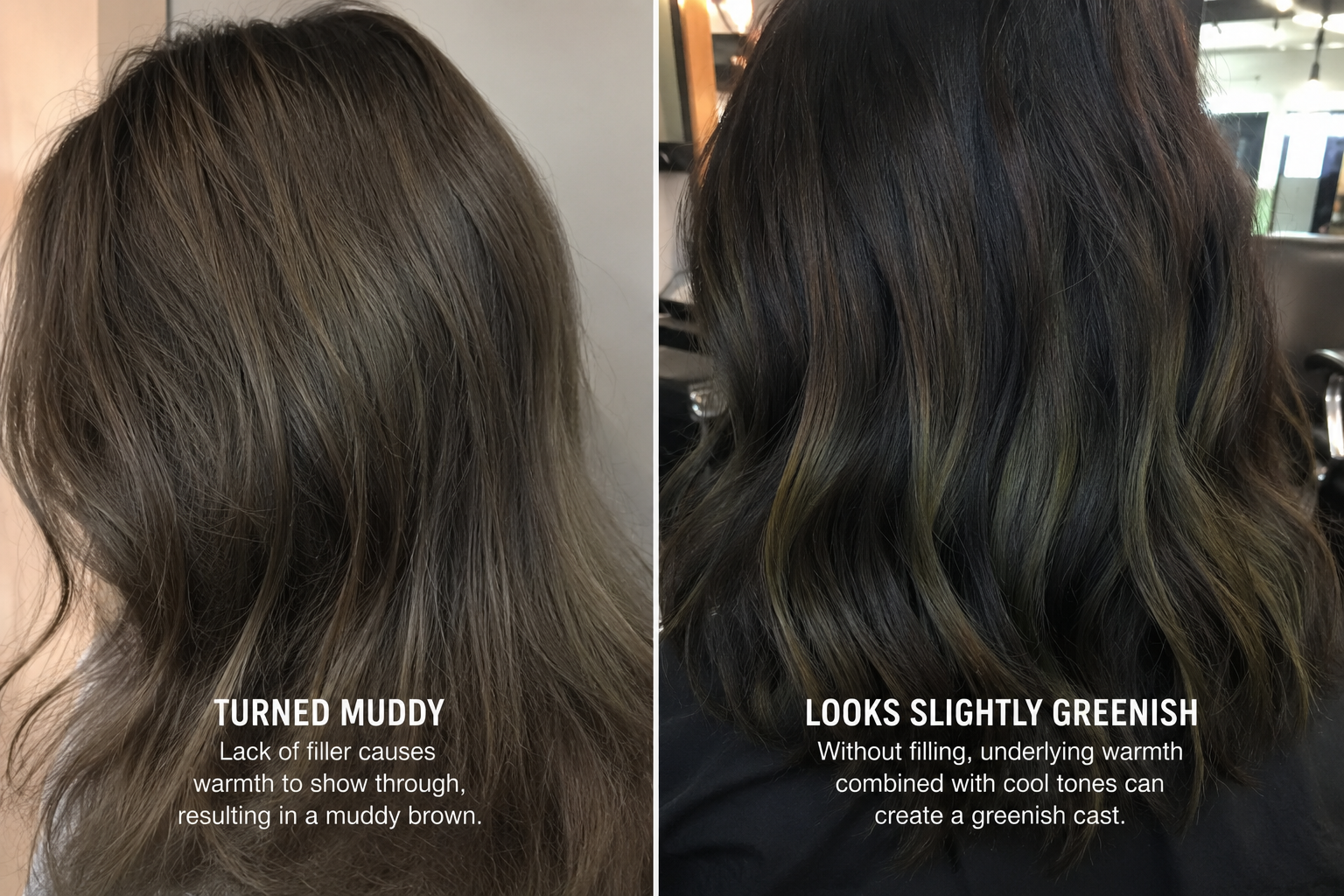
However, this doesn’t mean that every darker color applied over blonde hair will turn green without a filler. But when enough underlying warmth is missing, skipping the filling process can make the final result less predictable.
I find poor results from not filling most common when the goal shade is a brown or natural-looking hair color. But if your goal is extremely ashy, like a slate, denim, or gray color, then not filling the hair may actually be a better option for you to leave those underlying warm pigments out of your final shade.
Does All Blonde Hair Need to Be Filled?
As I briefly mentioned, you do not always need to fill blonde hair, and this is one of the biggest misconceptions about dyeing blonde hair darker. Whether you need a filler or not depends entirely on the individual situation.
If you’re only going 1 or 2 levels darker, it is unnecessary to fill the hair. If you’re going 3, 4, or more levels darker, it depends.
Not all blonde hair will take color equally. If the hair is damaged or porous, the hair may suck the dye up very dark and cool or ashy. Filling the hair helps equalize this out.
If the hair is healthy, it usually takes more on par with how it’s supposed to, and you may not need to fill.
Additionally, if your goal is very cool or ashy, adding those warm pigments may hinder your final result.
So because of these potential inconsistencies, I always suggest doing 2 test strands before dyeing your hair 3 or more levels darker. You’ll do one test strand where you fill the hair, and one where you don’t.
You may find that if you don’t fill, the hair will turn green or suck the color up very dark. Or, you may find that you actually prefer the cooler tone of the non-filled hair.
This gives you insurance for how your hair will come out before dyeing your whole head. And for DIY hair coloring, this is so important.
It also gives you the opportunity to see how each color will fade. Sometimes the non-filled hair will look great initially, but it fades too ashy over time.
Learn how to do a test strand here.
How to Fill Blonde Hair: Step-by-Step
You can watch the process for a visual example of how to fill blonde hair in the video below. Additionally, I suggest reading the following sections and mapping out your own formula as you follow along the video.
When filling the hair, one option is to dye the hair entirely the fill shade, then dye it your goal color in a second process.
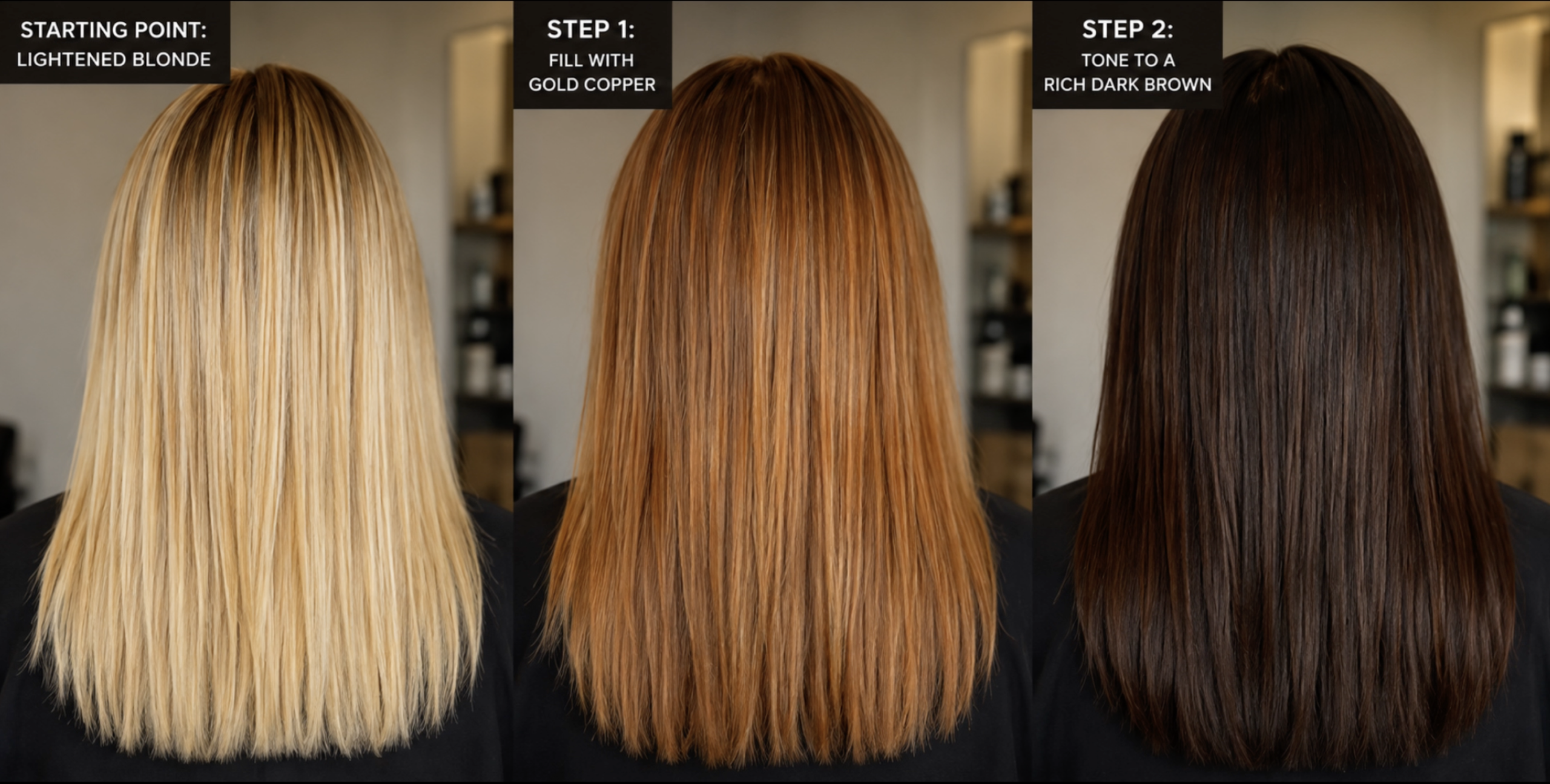
Or, you can mix your fill shade into your desired color. With Pravana, I was taught to mix the fill shade into the desired color, and this is the method I prefer because it saves you a lot of time.
If you choose to mix the fill shade into your desired color, you’ll do this in a ratio of 1/4 fill shade to 3/4 desired color.
***Since I’m sharing the products that I love to use with you guys, this page includes affiliate links to these products. If you take action and purchase a product through clicking one of my links, I’ll make some commission money from it at no extra cost to you. This enables me to be able to continue giving you awesome hair tips, so thanks! ***
How to Determine What Fill Shade To Use
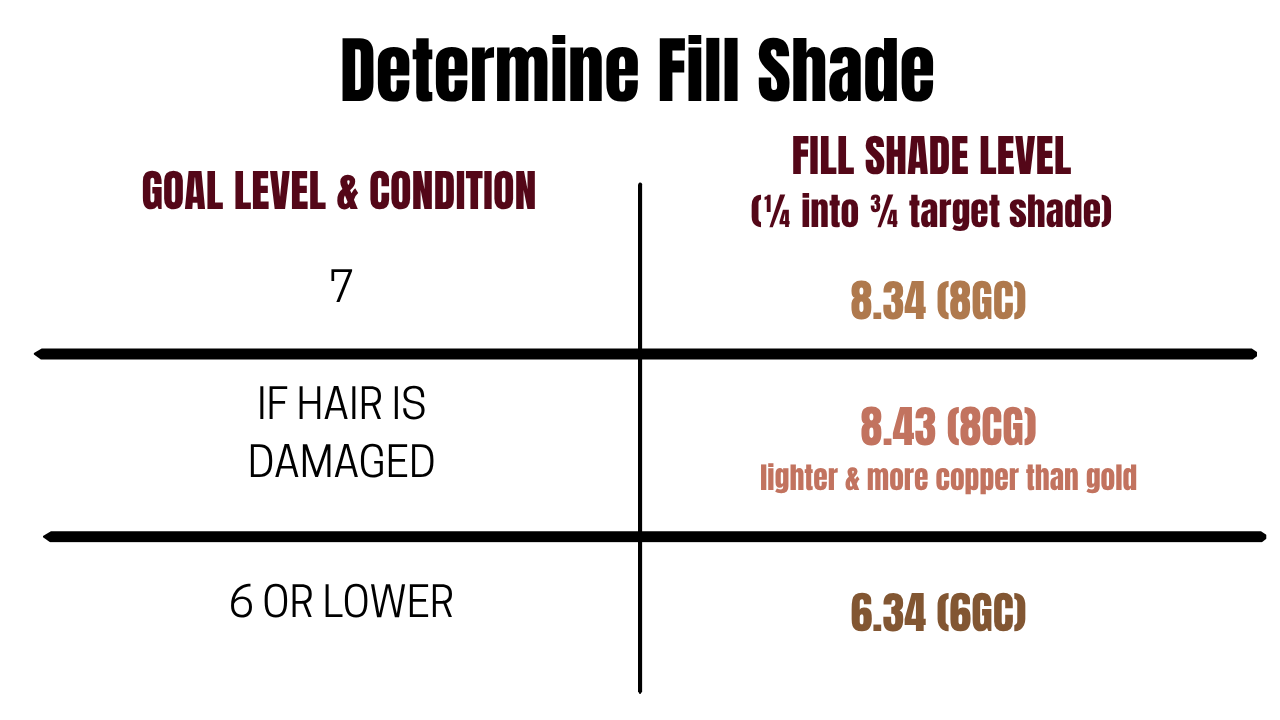
Fill shades are gold and copper (yellow and orange). Most of the time, we use a shade with more gold (70%) than copper (30%) so that the final color doesn’t take too warm.
However, when the hair is damaged or porous, it has a tendency to take too dark and cool. Because of that, damaged and porous hair should always use a level 8 with more copper (70%) than gold (30%), no matter what level you are depositing to.
The chart below shows what fill shade to use depending on how dark your desired color is, as well as what condition your hair is in.
What Developer To Use When Filling Blonde Hair
Whenever you’re going darker, especially if the goal is to go back to your natural hair color, you should always use 5 or 6 volume developer or lower, never higher.
10 volume developer or higher over natural hair color will expose the underlying warm pigment and create a new line of demarcation.
So unless you’re a scalp-to-ends blonde without any roots, 10 volume developer can create ongoing problems.
Filling Blonde Hair To Go Back To Natural Example:
Let’s take a look at an example. Oftentimes when dyeing blonde hair darker, the goal is to get back to our natural color.
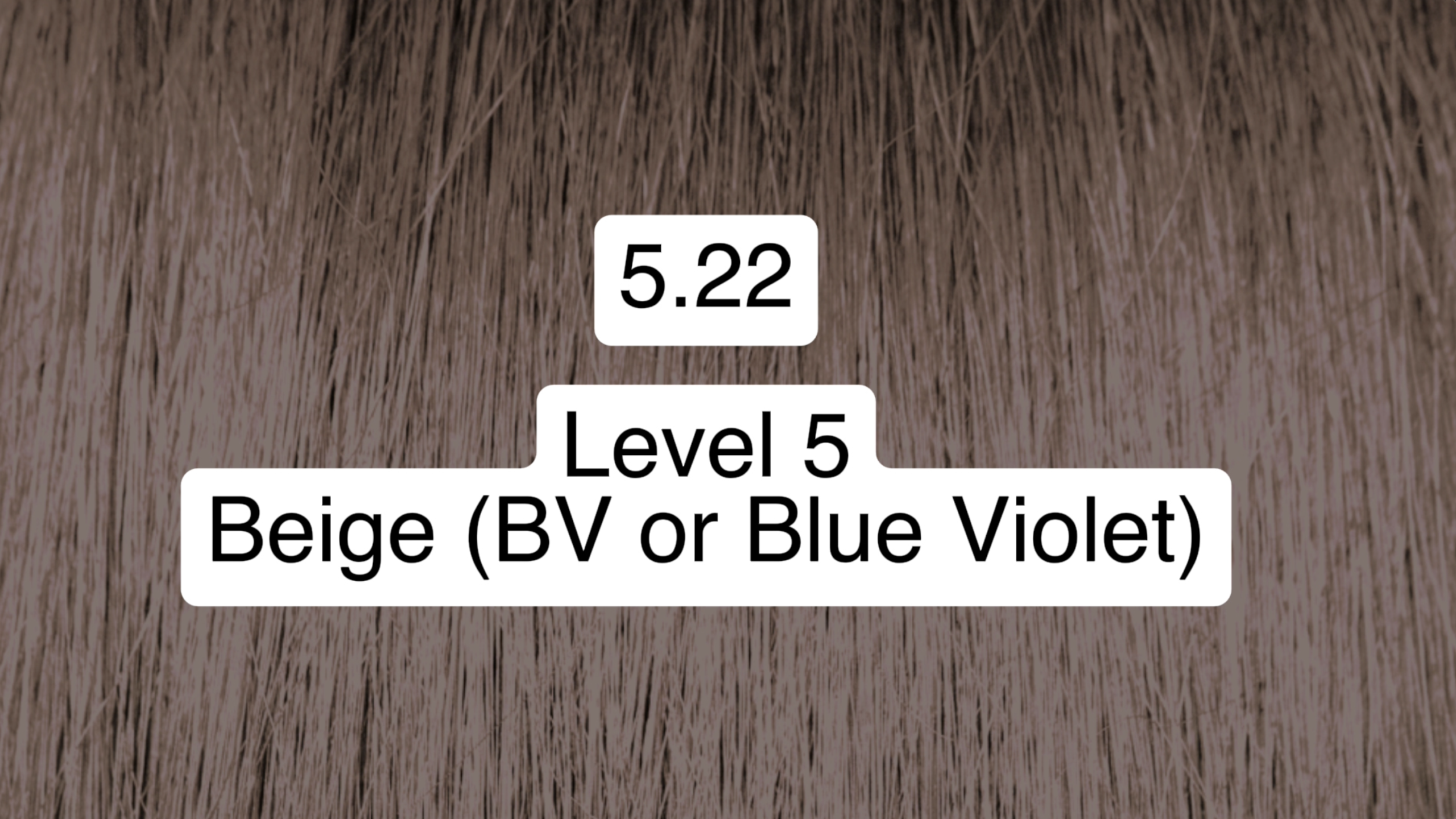
I love to use beiges (in Pravana this is .22, or Blue Violet), because they are very similar to many people’s natural color, so that’s what I’m going to use as my example.
In this example, I used level 9 swatches, which are 4 levels lighter than the goal color. Ideally, you’ll do this on two pieces of hair in the back of your head or underneath instead of on a separate swatch.
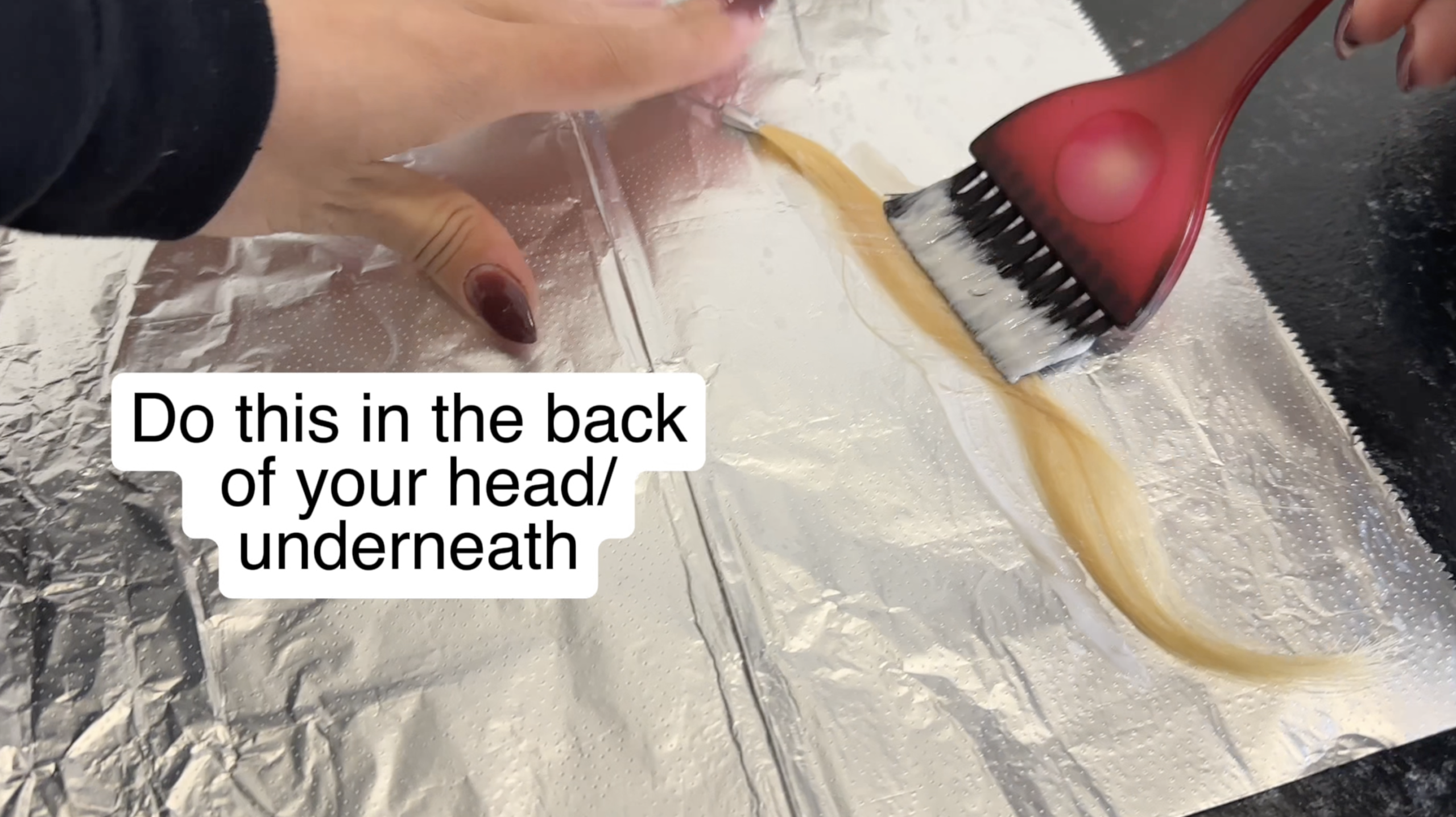
I dyed one swatch with 5BV with 5 volume developer by itself. This is the non-filled swatch.
And for the second swatch, I used 1 gram of 6GC (1/4 fill shade) mixed with 3 grams of 5BV (3/4 desired color) and 5 volume developer. This is the filled swatch.
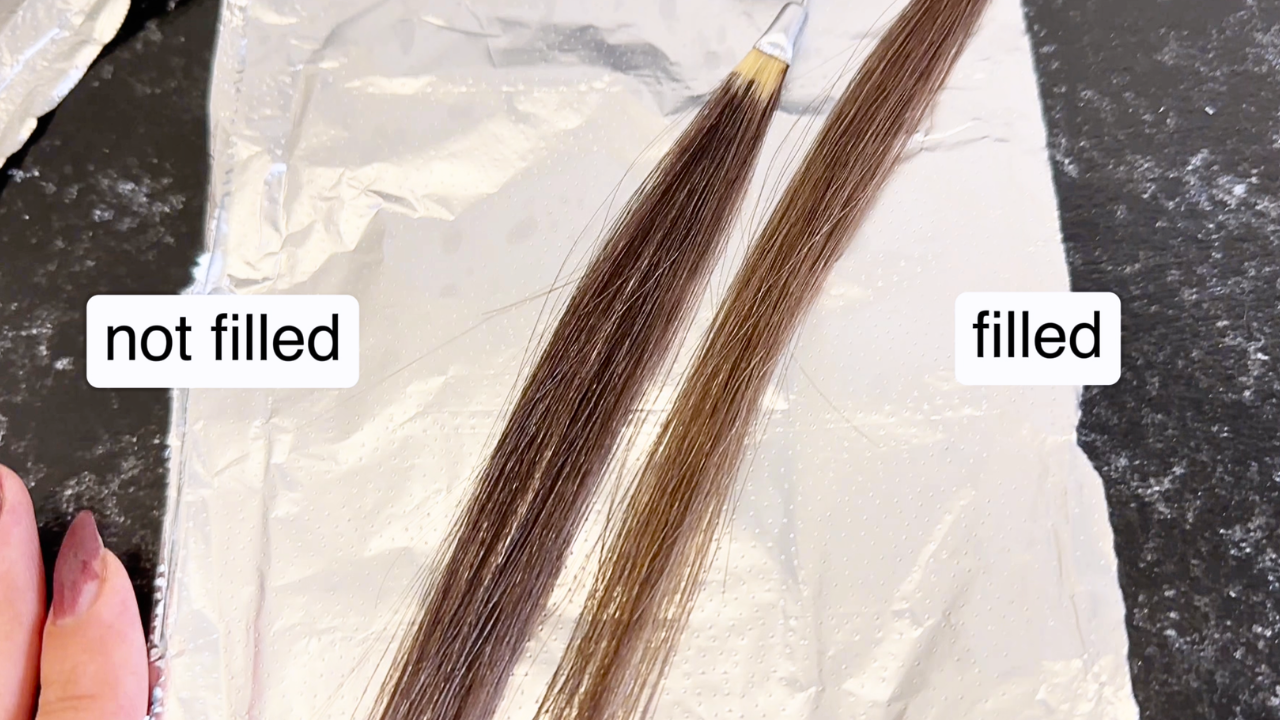
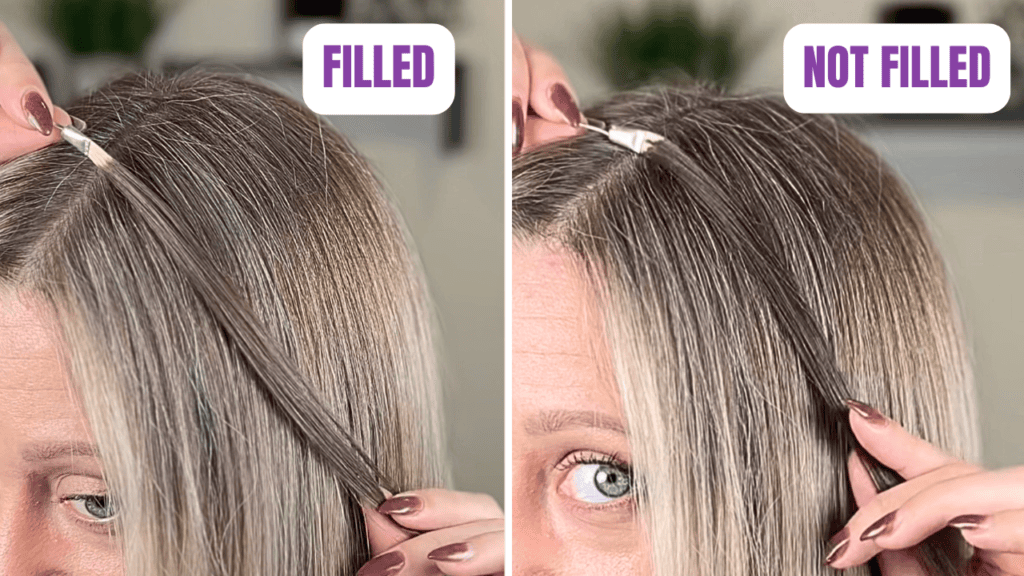
In the images, you can see that the non-filled swatch turned darker and ashier with a slight violet hue. That said, it did not turn muddy or green. This is because of the violet in the formula, as Pravana’s beige line has a blue/violet base.
Since the filled swatch more closely resembles my natural hair color, I would personally choose to fill the hair between these two results. However, you may prefer the not-filled swatch.
If you prefer the not-filled swatch, I suggest paying attention to how it fades before dyeing your whole head. My guess is that in this example, the not-filled swatch would take on a violet hue as it lightens up over time.
Common Mistakes When Filling Blonde Hair
- Not Accounting for Damaged/Porous Hair: If your hair is porous or damaged and you don’t adjust for this in your formula, the hair can suck the color up extremely dark and cool. This commonly happens to the ends of the hair if the ends are damaged and the mids are not. You may need a separate formula that is lighter with more copper than gold for the ends, so that the color takes evenly from roots to ends.
- Not Formulating the Filler Shade: While there isn’t one “rule” that you must always fill the hair, there still needs to be a method to the madness. If you do choose to fill the hair, you need to formulate the filler shade rather than just blindly mixing in red, gold, or copper to ensure proper results. Most color lines have a specific method to follow for filling the hair, and if you follow what I taught above, you’ll be in good shape.
- Adding Too Much Warmth: While adding warmth is important, especially when your goal is a natural brown color, it’s definitely possible to add too much warmth. Your filler shade should only be 1/4 of your final formula, and in most instances it should be 70% gold with only 30% copper, and no red should be added.
- Using Too Dark of a Filler Shade: When choosing your filler shade, it should always be lighter than your final desired outcome. Using a lighter fill shade will ensure that your goal shade covers it properly without too much fill shade showing through.
Should You Fill Your Hair Before Going Darker at Home?
If you’re dyeing your hair at home and making a significant change from blonde to brunette, filling is one of the things I would recommend at least understanding and/or testing before you apply your final color.
The most important things to determine are:
- What level is your hair currently?
- What level and shade are you trying to reach?
- Is your hair damaged or porous?
There isn’t one universal rule for everyone that’s darkening blonde hair. The right approach depends on the specific starting point and final goal.
Want to Go Darker? Start Here:
- How To Go Darker: Choose The Right Hair Dye Formula In 4 Steps
- What You Should Know BEFORE Dyeing Blonde Hair Dark
- How To Go Back To Your Natural Hair Color Without Permanent Dye
Final Thoughts
Filling blonde hair before going darker isn’t always necessary, but it can be an extremely important step when you’re dyeing blonde hair brown.
If the filling step is skipped, your hair can turn muddy, hollow, or even green.
So instead of automatically applying a brown shade directly over blonde hair, first determine what underlying pigments need to exist underneath that final color.
Depending on your goal, this sometimes means incorporating warmth into your final formula. And sometimes, if you’re only making a small change or your goal is very ashy, you may not need to fill the hair at all.
The key is understanding your starting level, your target level and tone, as well as the condition of your hair prior to dyeing your blonde hair darker.
Leave me any questions you have on how to fill blonde hair before going darker in the comments below. And make sure you subscribe if you want to make every day a good hair day!
share item

