

How to Mix Hair Dye: A Complete Beginner’s Guide
One of the most overlooked parts of the hair coloring process happens before a single drop of dye touches the hair, during the mixing process. So in this post, I’m breaking down everything a beginner needs to know about how to mix hair dye. I’ll cover how to measure, developer ratios, mixing tools, and common mistakes that can cause your color not to take properly.
As a stylist, the biggest mistake I see (even from experienced hairstylists) is eyeballing the developer. Wrong ratios mean unpredictable outcomes. No measuring means no consistency. And inconsistent mixing is one of the most common reasons hair dye doesn’t take the way it should. Learn these key fundamentals, and you’ll have a reliable foundation for every dye job going forward.
***Since I’m sharing the hair products that I love to use with you guys, my posts may include affiliate links to these products. If you take action and purchase a product through clicking one of my links, I’ll make some commission money from it at no extra cost to you. This enables me to be able to continue giving you awesome hair tips, so thanks! ***
Why Hair Dye is Mixed with Developer
If you’re new to hair coloring, let’s first discuss how hair dye works and why it needs to be mixed in the first place.
Permanent and demi-permanent hair dye need to be mixed with developer (which is actually hydrogen peroxide) to activate it. Without developer, the dye molecules won’t penetrate the hair or change the color at all.
When mixed together, the developer allows the color molecules to penetrate the cortex of the hair and change the color. The different volumes of developer are different strengths, with the higher number being the strongest. The most common are 10, 20, 30, and 40 volumes.
These are always mixed together immediately before coloring the hair. The dye that gets mixed with the developer will stop processing after a few hours. This means that it can’t be mixed ahead of time, and you also can’t save the mixed color if you have extra left over.
It’s also important that the developer lid is sealed properly. If it’s left open with access to oxygen, it will oxidize and won’t work when you go to use it next.
Can You Use Any Brand of Developer with Hair Dye?
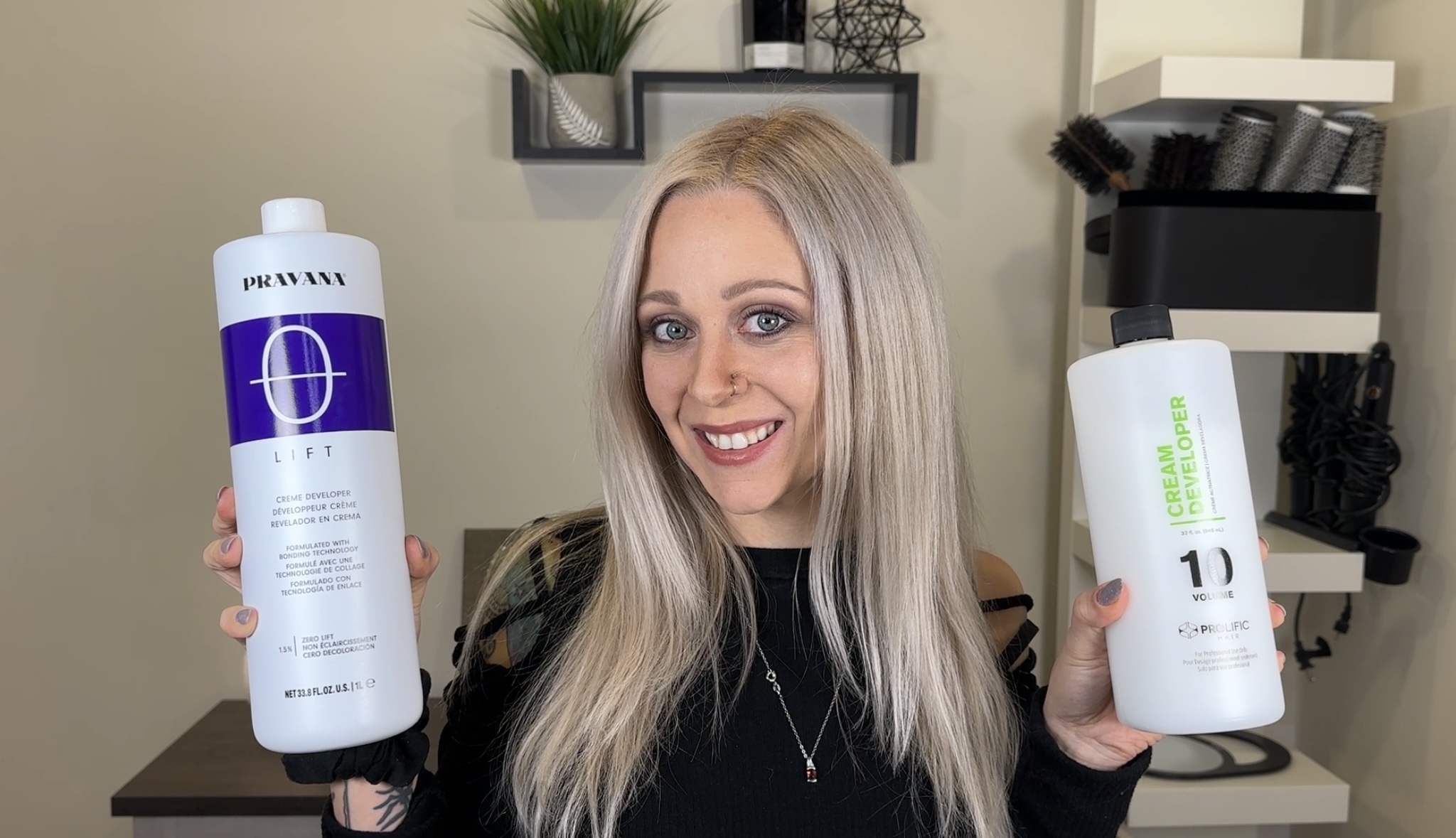
Generally, most brands will either highly encourage or only guarantee their dye if you use their brand of developer with it. Some say this is entirely for profit, but oftentimes they’ve formulated the ph, vicosity, or other additives in the developer specific to the benefits of the color.
That being said, generic developer brands often do work just as well, and in some cases even better. Let alone, they’re often a lot cheaper. MANY salons use only generic developer, especially because they often use more than one brand of hair dye. It’s easier to purchase one generic developer that works across the board.
Personally, I’ve found that with the professional hair color line Pravana, their developer irritated the scalp. But when I switched to a generic developer, the irritation went away.
Main takeaway: For the best results, you likely want to use the same brand of developer as the brand of hair dye you’re using. But using a different brand or generic developer will certainly still work as long as you’re using the same volume and consistency (cream instead of clear).
Hair Dye Developer Ratios Explained (1:1, 1:1.5, 1:2, 1:3)
Now let’s talk ratios. When we talk about what ratio to use when mixing hair dye, we’re referring to how much developer to mix with the hair color.
The ratios that color lines use can be any of the following:
- 1:1 (1 part dye or bleach to 1 part developer)
- 1:1.5 (1 part dye or bleach to 1.5 parts developer)
- 1:2 (1 part dye or bleach to 2 parts developer, also sometimes referred to as “double 40” when using 40 volume developer)
- 1:3 (1 part dye or bleach to 3 parts developer)
You must always use the ratio that the manufacturer recommends with their dye, even if you’re using a generic developer. Otherwise, the dye may be too thin or thick, which won’t saturate the hair properly, or the color may not take.
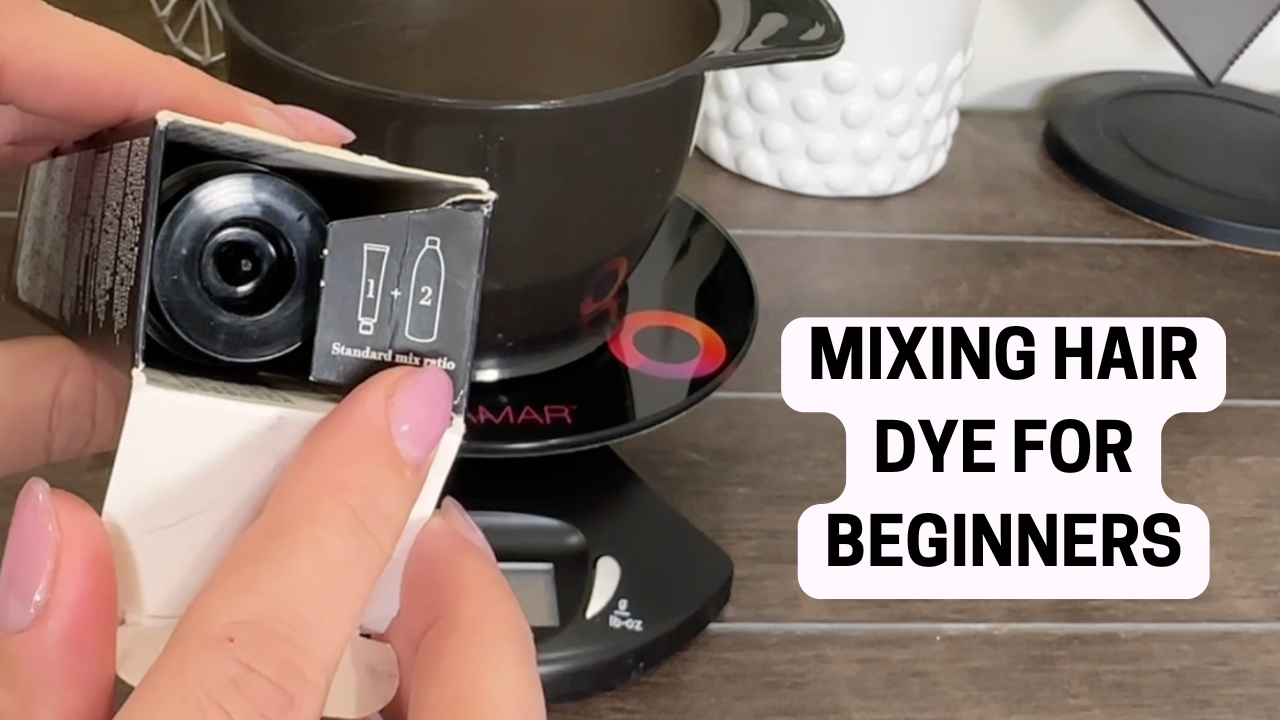
Pro Tip: You can find the recommended ratio on the box of dye.
Not sure what developer volume to use? Check out my guides on choosing the right developer volume for hair dye and developer for bleach for help with that.
Why You Need a Scale to Mix Hair Color
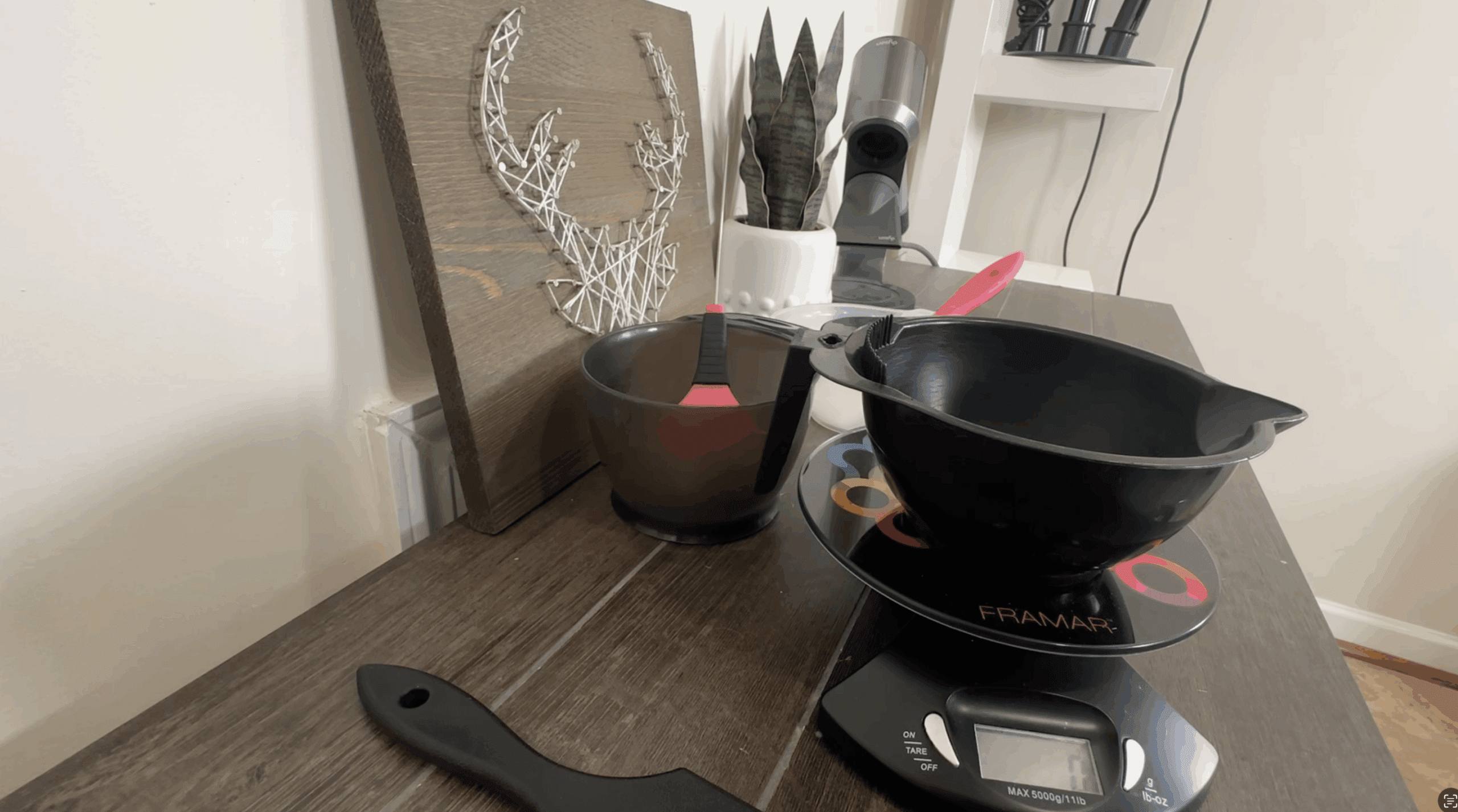
Using a scale to measure your hair dye is the best way to ensure accurate measurements. Even though there are usually ounces labeled on the side of the tube, those tubes aren’t often filled perfectly against those ounce marks.
Additionally, if you’re using a bowl and brush, you’d need to pour the developer into a measuring cup prior to putting it in the bowl. And when you do this, you’re losing some of the product to the inside of the measuring cup.
Because of this, using a scale is the most precise way to mix the correct amounts every time. It also saves you from having to wash an extra measuring cup.
I suggest getting a digital scale, as they’re the easiest to tare and have the most precision. You can get specific hair color scales or a simple digital kitchen scale to save a little money. They work just the same!
Additionally, a color key is another fantastic tool to help you avoid wasting hair dye. It rolls up the tube from the bottom as you go, so you’re getting every last drop out of the tube with no waste.
Why You Should Measure Hair Dye in Grams (Not Ounces)
Measuring hair dye in grams instead of ounces helps you to not only avoid wasting product, but it also allows you to be more precise in your measurement, especially for customizing your formula.
Grams are smaller increments, so you can get a lot more precision with smaller amounts of dye, where this would be difficult to do with ounces. I can’t tell you how many times I’ve seen someone waste hair dye because they mixed up a full ounce when only 10 grams were needed.
Additionally, I often mix two or three colors to get the exact formula that I need for the situation. Utilizing grams makes this more repeatable each time. Sometimes, I only add 1 or 2 grams of a shade to the formula. In ounces, this would be 0.035274 to 0.0705479 of an ounce!
How Much Hair Color to Mix Up
When determining how much hair dye to mix, this comes down to what technique you’re using as well as how much hair you have. I’ll list some general guidelines below, and these can be adjusted up or down based on whether you have thin or thick hair.
Since hair dye can’t be saved if you mix too much, it’s better to start small, then mix up another 10 or 20 grams if you need it to avoid wasting color.
Here’s what I recommend starting with:
- Root Touch Up (or root smudge): 30 grams of dye + developer
- Full Color Deposit: 50 grams of dye + developer
- Toner: 20 grams of dye + developer
- Lowlights: 20 grams of dye + developer
- Bleach (any technique): 20 grams of powder or cream bleach + developer
Since bleach processes differently from hair dye, I usually start with 20 grams of bleach, then bump up the developer volume with each new bowl. This way, the first highlights applied are done at the same time as the last ones applied.
Commonly Asked Questions
Q: Can you mix hair dye without developer?
A: Unfortunately, no, you can’t. Hair dye needs developer in order to penetrate the middle layer of the hair, in order for the color to change. The only exception to this is with semi-permanent hair dye, also known as “direct dye”. This dye is more of a stain, and doesn’t permanently alter the color of the hair as traditional hair dye does.
Q: What happens if you use too much developer?
A: If you accidentally add too much developer, you’ll want to counter it by adding more dye to the bowl. As long as you’re using a scale, you should be able to calculate how much more color to add using the recommended ratio. If you use the incorrect mixture, the color may not take properly.
Q: Can you mix two different hair dye colors together?
A: Yes, you can! I do this for almost every single color service I do to create custom colors for my clients. However, it’s important to only mix the same type of hair color. For example, you wouldn’t want to mix a permanent dye with a semi-permanent dye.
Q: Why can’t you use a metal bowl with hair dye?
A: Metal can trigger a chemical reaction (oxidation). This can weaken the dye, lead to inconsistent results, or even damage the hair. Instead of using a metal bowl or whisk, opt for a plastic, ceramic, or silicone bowl and a plastic/nylon color brush.
Conclusion
Mixing hair dye correctly isn’t as complicated as it may seem at first. Once you start measuring, following the right ratios, and using the right tools, you’ll notice your color take better and become more predictable.
These fundamentals are the foundation that everything else is built on with hair color, so if you take nothing else away from this post, take this: measure every time, no exceptions.
Now that you’ve got the mixing side down, the next step is learning how to actually formulate: choosing the right shade, the right developer volume, and how to think through a color result before you ever open a tube. That post is coming soon, so make sure you stay tuned to learn how to formulate!
In the meantime, drop your questions in the comments below. Whether you’re just starting out or you’ve been winging it for years, no judgment here. Let’s figure it out together!
share item

