

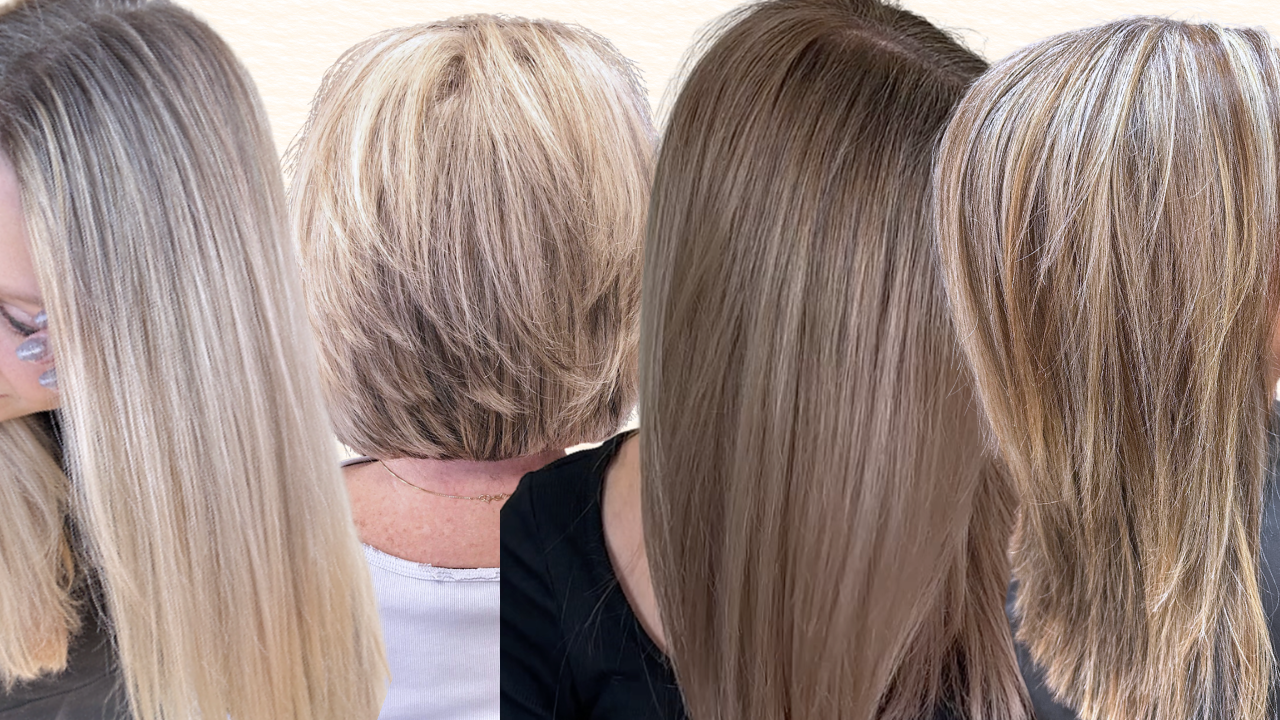
The 4 Best Ways To Grow Out Old Hair Color
If you’re trying to grow out old hair color, whether you’re going back to natural, going lighter, or have finally decided to embrace your gray, you’ve got several options to make the process look intentional and less harsh. So in this post, I’ll walk you through 4 of the best methods to help you grow out your old hair color. I’ll also share the upkeep for each method to help you decide which one fits your situation.
I’ve helped many clients transition their hair back to their natural color, and I’ve also started this process on myself. I’ll share several YouTube videos where I showcase several of the mentioned methods as I grow out my own blonde hair color.
Common Reasons To Grow Out Old Hair Color
- Going back to your natural hair color
- Embracing your natural gray
- Lightening or removing dark colored hair/box dye
Depending on what your current situation is vs. your goal, there are several different methods to choose from. The best method for you depends on your budget, situation, and how quickly you want to transition.
***Since I’m sharing the products that I love to use with you guys, this page includes affiliate links to these products. If you take action and purchase a product through clicking one of my links, I’ll make some commission money from it at no extra cost to you. This enables me to be able to continue giving you awesome hair tips, so thanks! ***
4 Methods to grow out old hair color
Some of these methods are easy to do yourself from home for gradual and inexpensive blending. While others require expensive salon trips, but they provide quicker results.
- Highlights & Lowlights
- Semi and/or Demi Permanent Color
- Gradually Lightening The Roots
- Bleach and Tone Corrective Color
1. Highlights & Lowlights Method
Works best for: Embracing natural hair color, gray blending, lightening your dark colored hair
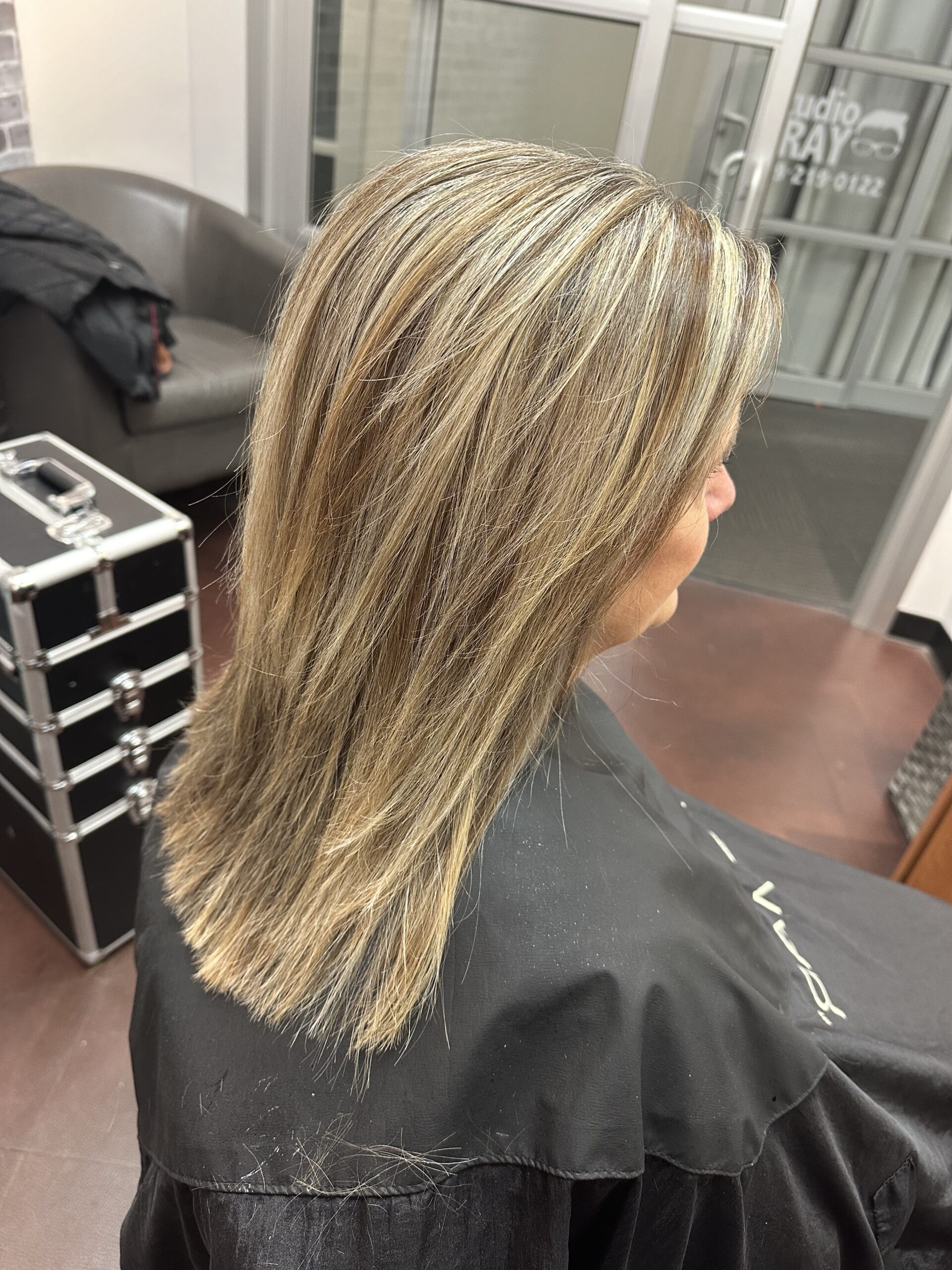
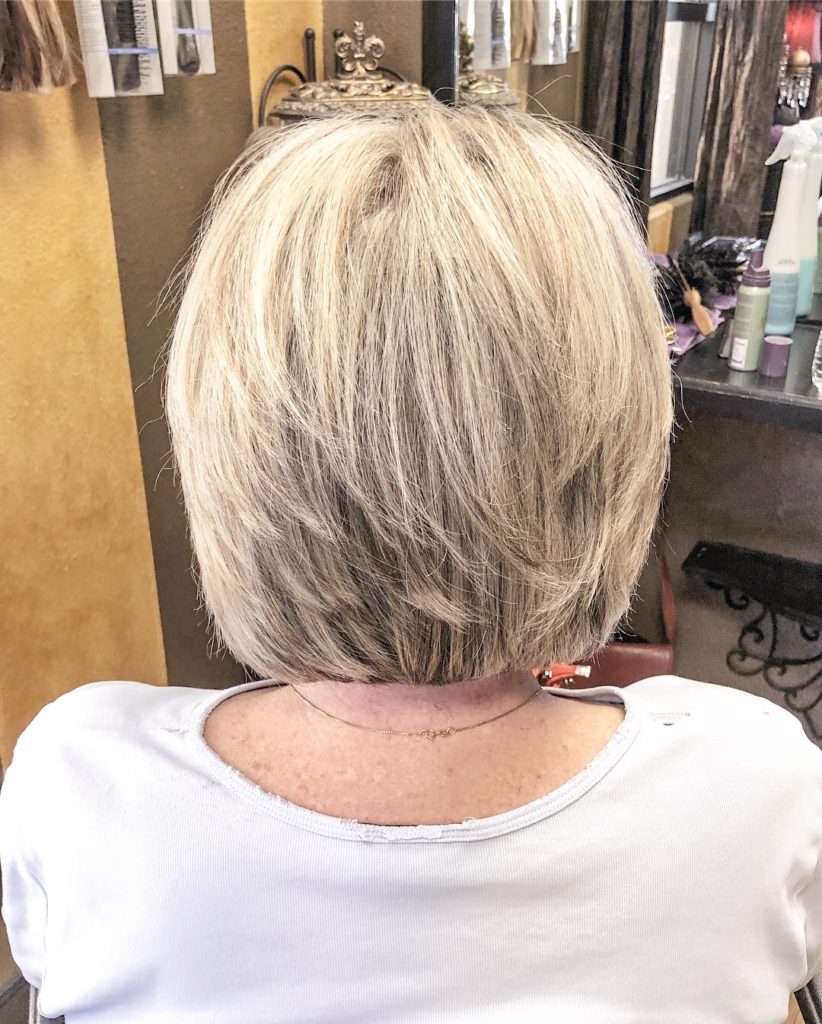
This option is typically my number one recommendation when aiming to grow out old hair color. When you high/lowlight your hair, it will blend your natural color with your mid-lengths and ends. This works wonders for gray blending services. These highlights can also be toned down accordingly if you don’t want to have blonde highlights
When you highlight/lowlight, you are easing yourself into your new look rather than being shocked at first. I have transitioned several ladies from dyeing their hair every 3 weeks to eventually all-over natural gray this way.
Depending on your goal, the lowlight (which is a darker colored highlight) should be fairly similar to the color on your mids and ends to start. And it should be lightened at least one level per session. Each time you have the high/lowlights done, you’ll want to gradually add less and less so that your natural color is taking over.
And depending on your situation, you may not need to add any lowlights to your hair at all (I don’t in the video example below). Sometimes the color will blend nicely with just highlights, and you can gradually add less and less. Your stylist will help you find the best option based on your current hair and your goals.
How often do highlights and lowlights need to be done?
You should try to go longer in-between sessions than usual for this method. This gives you a good transitional blend so that you can grow out your old hair color quicker.
The amount of time you go between highlighting sessions is specific to every case. If the color you’re trying to grow out is drastically different from your natural color, then you’ll need to come in more frequently than if there is only a subtle difference. After several sessions, you can gradually come in less and less.
You also don’t have to highlight your entire head every time. You may want to start with the whole head the first time, and then the second time only do the top where it shows. Or, you may only need to do the top where it shows, and can allow the underneath layers to grow out fully. This is what I do in the video example below as I grow out my blonde hair.
If you pull your hair back often, you may want to do a few foils on the sides of your face or underneath. But you can leave the mid layers to grow out on their own since they are typically covered by the rest of your hair.
Ultimately, you should come in no sooner than 8 weeks for this method.
2. Semi and/or Demi Permanent Color Method
Works best for: Going back to natural hair color, Gray blending
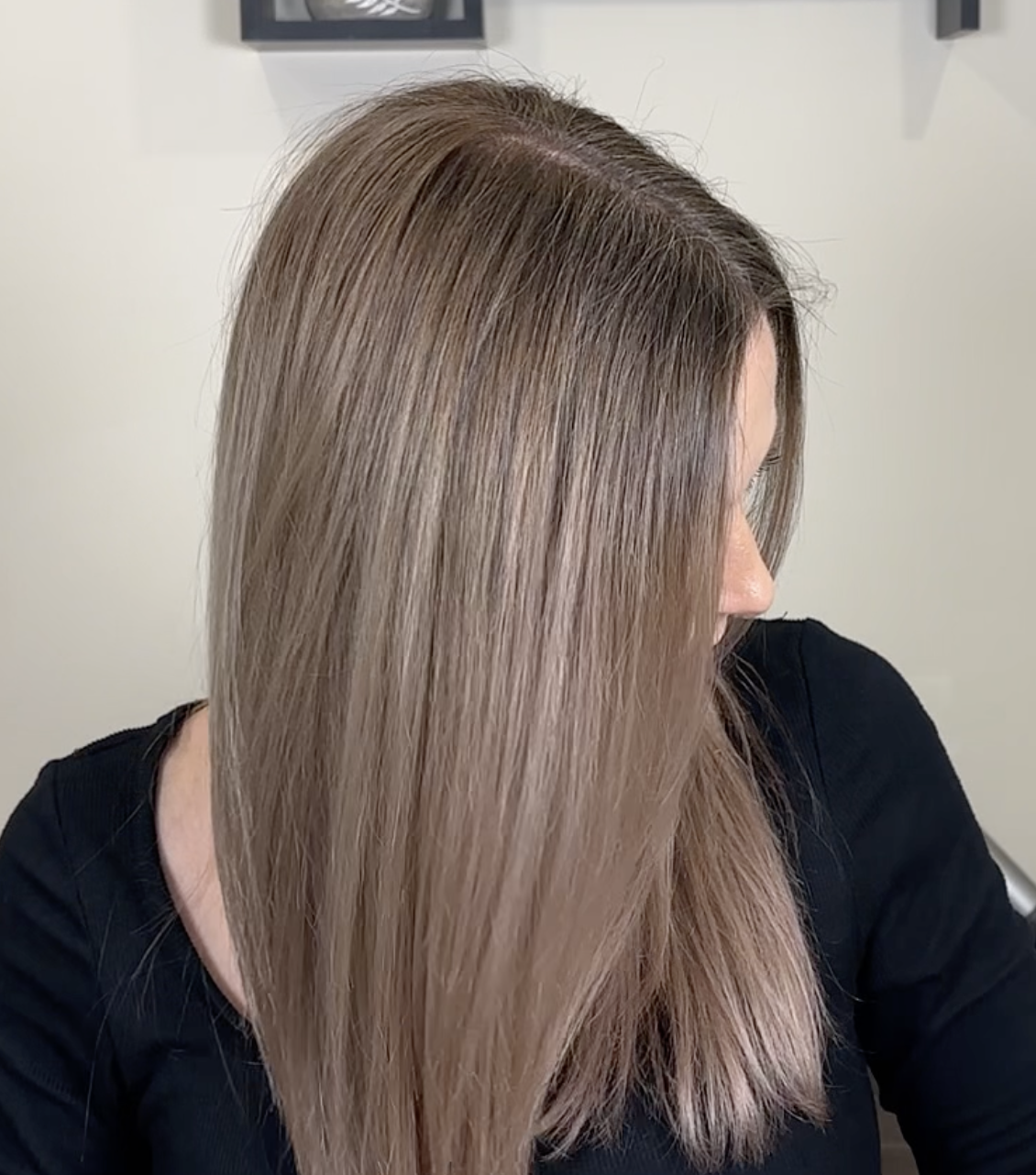
Using a gloss and/or semi-permanent dye when aiming to grow out old hair color can help to blend in your new growth. This is the most inexpensive way to grow out old hair color (other than not doing anything to it at all, of course!).
Semi and demi-permanent hair dye will not shift your natural color, so it won’t create a new root line of demarcation that you have to keep fighting to blend. As it fades, the hair color will lighten. And starting with a darker tone will make it last a little longer than the alternative.
Each time you do this color service, use a slightly lighter shade. This helps to marry the two tones together and removes the harsh line from your regrowth. This also usually only needs to be applied to the new growth, and not to the already colored hair (unless you’re growing out blonde, then it’s the other way around!)
I usually suggest starting with a demi-permanent (and 6 volume developer), then using semi-permanent color-depositing shampoos and conditioners to maintain the color until it grows out. But if you’re on the fence about the change, you can use only the semi-permanent color instead of starting with a demi. That’s what I do in the video example below.
How often does semi and/or demi-permanent color need to be done?
The only downside to this method is that this color will fade out of the hair, and you’ll probably have to do it more consistently to maintain it. The nice thing is that you can maintain it from home with the semi-permanent shampoos and conditioners that I mentioned above. If you are on a budget, this is the option that I recommend.
I would recommend using a color that is between the ends and your natural color.
Semi-permanent colors usually last anywhere from 4-8 weeks if they aren’t maintained. After that, they will fade back to the original color. If you use a demi first, this will extend that time to 8-12 weeks. However, if you continuously use the semi-permanent shampoos and conditioners until the old color grows out, you likely won’t have to dye your hair again!
3. Gradually Lightening The Roots Method
Works best for: Lightening dark colored hair, gray blending
This is a great option if you aren’t looking to make a drastic change and only want to lighten the color slightly or soften harsh roots. If you have black colored hair but would like to be brown all over, then this is the way to go.
When it’s time to touch up your roots, you’ll use a shade one level lighter than the one you used previously. Keep going a little lighter each time or every other time until you are at your desired level. This will give you a nice blend between scalp and ends rather than a quicker, drastic, and more noticeable change.
My suggestion is to try to fade the color as much as possible before each service. I recommend doing this by washing your hair with Dawn dish soap and very hot water. Yes, dish soap! It will fade your color with each wash. You’ll want to follow this with your regular shampoo and conditioner, and I recommend following that with a conditioning treatment afterwards.
How often do you need to gradually lighten the root color?
I recommend going a little longer than normal between touch-ups for this method. If you normally come in every 4 weeks, try pushing it to 6 or even 8 weeks instead. This will allow the dark color to fade out before each session for a better blend.
4. Bleach and Tone Corrective Color Method
Works best for: Embracing gray hair color, lightening your dark colored hair
This is the last method that I suggest to grow out old hair color because it is the most expensive and damaging to your hair. This will get you your full result faster than all of the other options, but it comes at a cost.
This is a corrective color service, and prices are typically significantly increased because it is a lot of hard work. I have spent 10+ hours in one day doing one of these services.
If you choose to do this method, make sure that you are seeing a skilled hair stylist. Don’t try to skimp and save money by going to someone cheaper. Your hair can be severely damaged, and you likely wouldn’t end up with a color you are happy with.
When this method is done, the color you are trying to remove is stripped from your hair with color removers and bleach. Once the hair is lightened as much as possible that day, it is then toned to remove warmth and to blend with the natural as much as possible.
You WILL go through some stages that are unpleasant. If the hair is dark to begin with, it turns red, orange, and yellow before it can take on an ashier tone. Most natural tones are ashy, so you have to get the hair pretty light for it to be possible to match. Embrace the warm browns, reds, coppers, and caramels until you can get to where you want to be.
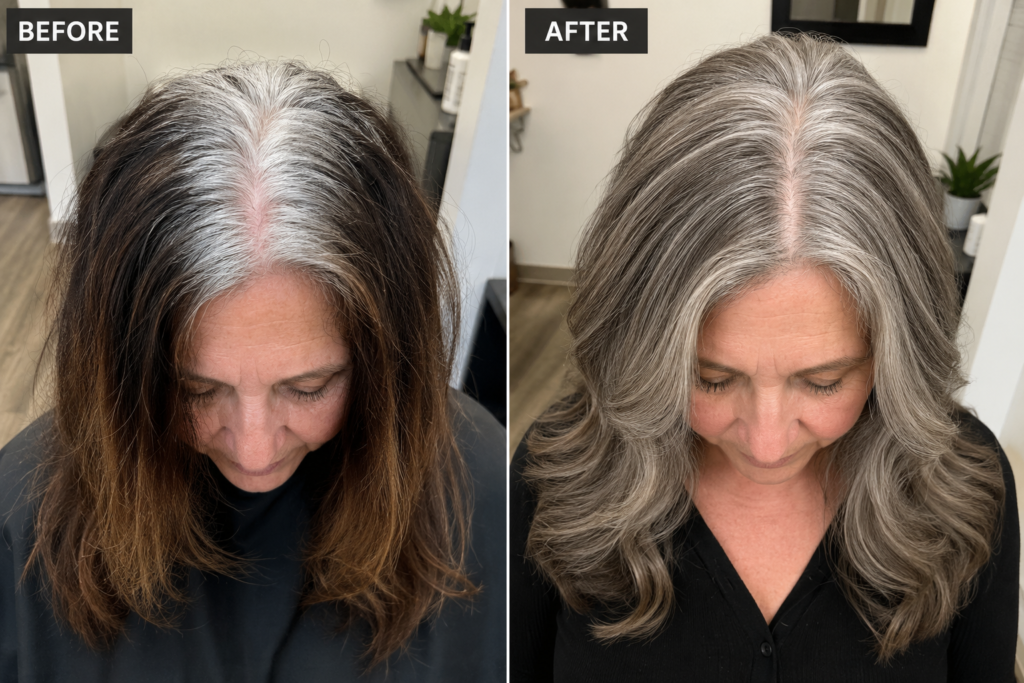
How often does bleaching and toning need to be done?
This result doesn’t always happen in one session. If you space it out to multiple sessions, it can cost less and be less damaging to your hair. There is no point in having the hair color you want if you damage it anyway.
The length of time between bleaching sessions will greatly depend on your goals as well as the condition of your hair. You may be able to do them once a month, but others will have to wait several months between bleaching sessions to keep the hair healthy.
But if you do get it done in one session, you’ll likely be at the salon all day long, and you will spend quite a bit of cash. You will have to come back in for frequent toners until the hair is most of the way grown out, typically once a month
It is difficult to match natural hair exactly, and the hair that is dyed will fade each time you wash it. .
Conclusion
Each method for growing out old hair color has different benefits depending on your goal, budget, and how dramatic your desired change is.
If you want a softer transition, highlights or gradually lightening the roots usually work well. If you want the most budget-friendly option, semi and demi-permanent color is the cheapest. But if you want the fastest results, corrective bleaching may be necessary.
No matter which option you choose, maintaining the health of your hair throughout the process is key.
If you have any further questions for me on growing out your old hair color, leave them for me in the comments! And subscribe if you want to make every day a good hair day!
share item

