

How Often To Wash Your Hair: Find Your Magic Number Based on Hair Type
“How often should I wash my hair?” is probably one of the most frequently asked questions I receive from clients as a hairstylist. And like many other topics in the hair world, the answer varies drastically from person to person. We all live different lifestyles, produce different amounts of oil, and have various types and textures of hair. So in this post, I’m providing you with a roadmap to determine the exact frequency that YOU should wash your hair based on your hair and skin type, lifestyle, and even the climate that you live in. I’ll also throw in some extra tips that you can implement immediately to extend the time between shampoos.
Personally, I’m someone whose scalp gets oily pretty quickly, and I know how frustrating it is when you’re told, “If you just wash it less, you’ll train it to produce less oil”, but it never seems to work. Over time, I’ve experimented with different routines, products, and tricks to stretch the time between washes, and I’ve figured out what actually makes a difference. And I’m excited to share those tips with you!
Factors That Determine How Often You Should Wash Your Hair:
Let’s first set the record straight: There is no universal number of days you should go between hair washes. If your friend can go 3 weeks without washing her hair, that’s great for her, but that doesn’t mean that you can or should even try to go that long.
So, as I mention the different factors, write down the average number for where you fit into that category. And at the end, you’ll combine them to determine your magic number. I’ll calculate mine along the way as an example so you can see how it works.

Hair Type
Since hair absorbs oil, the amount of hair you have, the length, wave pattern, and the thickness of each hair strand will make a difference in how much oil your hair can absorb before it starts to get greasy. And when we have curls in our hair, this opens the cuticle at each bend and curve. When the cuticle is open, it’s easier for moisture to slip out.
In general terms, if you have a ton of coarse curly hair, you’ll be able to go much longer between washes than someone with thin, fine, and straight hair. One of my clients who has extremely thick and curly hair goes an average of two weeks without washing her hair with no problem!
Keep in mind that these numbers are averages, and all factors will need to be considered for your magic number. If you aren’t sure what your hair type is, see my posts linked for each category to determine where you land.
- Thin hair: 1-2 days
- Medium hair: 3-4 days
- Thick hair: 4+ days
I personally have medium-density hair, so my first number is 3-4.
- Fine hair: 1-2 days
- Medium hair: 3-4 days
- Coarse hair: 4+ days
I personally have medium-textured hair, so my second number is also 3-4.
- Straight hair: 1-2 days
- Wavy hair: 3-4 days
- Curly hair: 4+ days
I personally have wavy hair, so again my number is 3-4.
Length:
- Short hair: 1-2 days
- Mid-length hair: 3-4 days
- Long hair: 4+ days
I have long hair, so my number is 4+.
My current number is: every 4 days
Skin Type
Skin type is much quicker, as we’re just determining how much oil our skin produces.
And I want to point out that while there is a tiny bit of truth to the myth that “if you wash your hair too often, it gets even oilier”. It doesn’t quite work like that. If you have naturally oily skin, washing your hair less isn’t going to decrease the number of sebaceous glands you have. It may make them produce slightly more oil if your skin is feeling excessively dried out, but most people don’t notice a huge difference with this. Some of us just have oily skin, no matter what we do.
- Oily skin: 1-2 days
- Combination skin: 3-4 days
- Dry skin: 4+ days
I have oily skin, so my number is 1-2 days for skin type.
My current number is: every 2-3 days
Hair Condition/Chemical Treatments
Generally, healthy and virgin hair needs to be washed more often than damaged and chemically treated hair. This is because when hair is damaged or chemically treated, the cuticle is often blown open or damaged, making it easier for moisture to slip out of the cortex of the hair. Since our scalps produce oil to moisturize, this oil is needed to keep the hair soft and shiny.
To determine if your hair is healthy or not, see this post here.
- Healthy/Virgin hair: 1-2 days
- Color treated/Ironed somewhat regularly: 3-4 days
- Bleached/Lightened/Damaged/Chemically Straightened: 4+ days
Now I know this can get a little confusing if your hair is color-treated or bleached, but not at your scalp. In this instance, you’d select the middle option.
Currently, my hair is lightened, but not up to the root. So my number is 3-4 days.
Based on my hair type, my number is: every 3 days.
Lifestyle
Your lifestyle refers to how active you are, particularly how much you sweat. This can mean if you work out regularly and sweat often, or if you just seem to sweat more or less than average.
When sweat sits on our scalp, it can create a breeding ground for dandruff. Later, we’ll talk about some ways to extend the time between washes when dealing with sweat, but for now, just follow the timeframe below.
- Active/Sweat Frequently: 1-2 days
- Medium: 3-4 days
- Not Active/Rarely Sweat: 4+ days
While I do go to the gym regularly, I’m not always dripping in sweat. So my number is 3-4 days.
Based on my hair type and lifestyle, my current number is: every 3 days
Season/Climate
Now, the season also correlates to how much you’re sweating. Obviously we all sweat more in 80° weather than in 30° weather. But the climate makes a difference too. If you live out west where the air is drier, you’ll be able to go longer than if you live on the East Coast where you can cut the humidity with a knife.
Season:
- Summer: 1-2 days
- Spring/Fall: 3-4 days
- Winter: 4+ days
At the time of writing this it’s fall, so my number is 3-4 days.
Climate:
- Humid air: 1-2 days
- Medium: 3-4 days
- Dry air: 4+ days
Currently I live on the East Coast, so my number is 1-2 days.
Based on my hair type, lifestyle, and season/climate, my number is: every 2-4 days
Determining your total score:
For me, I had a few 1-2 days, many 3-4, and a few 4+ days. So you could say that my average timeframe is to wash my hair every 2-4 days, or every 3 days on average. This seems to be the sweet spot for me!
If you had mostly 1-2’s, I suggest implementing the tips in the next section to extend your shampoos as much as possible. But the reality is, you won’t likely be able to go a full week without washing. In the common questions section below, I talk about whether it’s bad for your hair to wash it every day or not.
If you had a lot of 4+’s, then I suggest testing the waters to find how long you can go. As I mentioned earlier, I have a client who can regularly go 2 weeks without washing her hair, no problem. I just wouldn’t push it much further than that, because you don’t want to create buildup on your hair or scalp.
How to Extend Time Between Hair Washes:
Now, let’s talk about how we can extend that number for you, or at least get you to the high end of your average. You may want to implement these tips regularly, or maybe you have something that’s creating a reason to extend your shampoos: going on a trip, being in the hospital, or breaking an arm.
While my number was an average of every 3 days, I have gone two weeks without washing my hair. And in fact, I was doing this for an extended period in my life where I was working and in school, and just didn’t have time to wash it often.
***Since I’m sharing the products that I love to use with you guys, this page includes affiliate links to these products. If you take action and purchase a product through clicking one of my links, I’ll make some commission money from it at no extra cost to you. This enables me to be able to continue giving you awesome hair tips, so thanks! ***
1. Blow-Dry to Prep Your Hair
When we blow-dry our hair, we’re prepping it to go longer between washes. The cuticle of the hair is slightly opened, which preps the hair to absorb oil. When we don’t blow it dry, the oil coats the outside of the hair rather than being absorbed deeper inside to the cortex.
And if you’re someone who sweats a lot or it’s summertime, I suggest blow-drying your hair to dry it from the sweat. If sweat sits on your scalp, it can irritate and lead to dandruff growth. So personally, after a workout or being outside, I’ll blow-dry my hair to make sure it’s fully dry.
This usually gets you at least another day or two. I like to use a large round boar brush to smooth my hair out while I blow it dry. But we’ll talk more about brushing in a moment.
2. Brushing Your Scalp & Distributing Oil
Brushing your hair is a fantastic way to pull the oil down from your scalp to the ends that really need it. But I’m not talking about with a wet brush for 2 seconds while you get the tangles out.
I’m saying to take 5-10 minutes with a boar bristle brush, fully brushing your scalp to the ends. Not only does this stimulate and exfoliate your scalp, removing buildup, but it also distributes the oil to your ends that need the moisture.
And to take it one step further, break out your blow dryer and blow-dry the oil down your hair. I do this after working out or if I sweat a lot that day because you do not want sweat to sit on your scalp, as this can lead to irritation or dandruff. The air from the dryer opens the cuticle so that the hair can better absorb the oil.
Just keep in mind that this doesn’t work as well with nylon or synthetic bristle brushes. Natural, boar bristles will produce the best results. Personally, I have one large round brush that I use for round brushing my hair as well as distributing the oil, but you can use a paddle brush too.
- Round Boar Brush – Large
- Round Boar Brush – Medium
- Round Boar Brush – Small
- Paddle Boar Brush – Large
- Paddle Boar Brush – Medium (Oval)
To learn more about how to brush your hair and scalp to keep them healthy, see this post here.
3. Dry Shampoo to extend washes
Dry shampoo absorbs the oil from your hair, neutralizes odor, and can even aid in adding volume to fine or thin hair.
The secret to getting the most amount of days between washes is using it from day 1 on. This way, rather than combating already oily hair, you’re being proactive and not allowing it to get oily in the first place.
Now, not all dry shampoos are created equally. Below are 4 different options listed from the weakest to the strongest:
- Olaplex 4D: Light dry shampoo, best for those who hate that tacky feeling
- Amika Perk Up: Best average dry shampoo (most popular on the market)
- Amika Perk Up Plus: Helps you extend more days, great for trips or hospital stays
- Amika Perk Up Ultra: Maximum oil control for very oily skin
To see my full guide on dry shampoo, including how to use it, see my post here.
4. Use dandruff products & a scalp tonic
If you are oily or dandruff-prone, you may find it hard to skip many days without your scalp getting irritated. While your hair might not necessarily feel greasy because of the dry shampoo, your scalp still gets itchy and irritated (I fit into this category!)
To stop this from happening, I regularly use a medicated shampoo and a topical scalp tonic once I get out of the shower to reduce the risk of dandruff and irritation forming. This works wonders.
Now, if scalp issues are present, I suggest reading this post here to determine if you are experiencing dandruff or dry scalp, because they are two different issues that require opposite treatments. But generally, if you’re oily, you are more prone to dandruff.
Common Questions About Hair Washing:
Now, let’s talk about some of the most common questions I get about washing your hair:
- Is it bad to wash your hair every day?
- How often should you wash your hair if you want it to grow?
- Should you get your hair wet on non-wash days?
- How often should you condition your hair?
1. Is it bad to wash your hair every day?
Ideally, it’s in your best interest to avoid washing your hair every day if possible. I know that this can be difficult if you have extremely thin hair and/or you sweat a lot. But it would be better if you could wash it every other day instead.
Now, it’s not the end of the world if you do shampoo your hair every day, but it can be damaging if you’re blow-drying and/or ironing it, especially if it is lightened or chemically treated.
Just make sure that when you do wash, you are using a professional-grade shampoo and conditioner that will not dry out your hair and scalp. I also recommend bonding/strengthening treatments to be sure you aren’t causing breakage.
I suggest using Olaplex shampoo, conditioner, and bonding treatment. This is a strengthening system that rebuilds broken bonds in your hair.
2. How often should you wash your hair if you want it to grow?
So contrary to what some people on the internet say, washing your hair and hair growth aren’t really related at all. Your hair grows in stages that do not change based on your shampoo routine.
I will say that washing your hair too frequently can dry it out which can cause more damage to the ends, and ultimately make it break off. But shampooing doesn’t have an impact on the speed of the hair coming out of your scalp, but rather the condition of your hair itself.
If you are interested in reading more about the stages of hair growth, check out my post here, which also gives tips about hair loss.
And if you want tips on how to keep your hair in its healthiest condition so that you can grow it out, read my post here.
3. Should you get your hair wet on non-wash days?
To save time and avoid causing unnecessary heat damage, I suggest avoiding getting your hair wet on non-wash days if you blow-dry or style your hair.
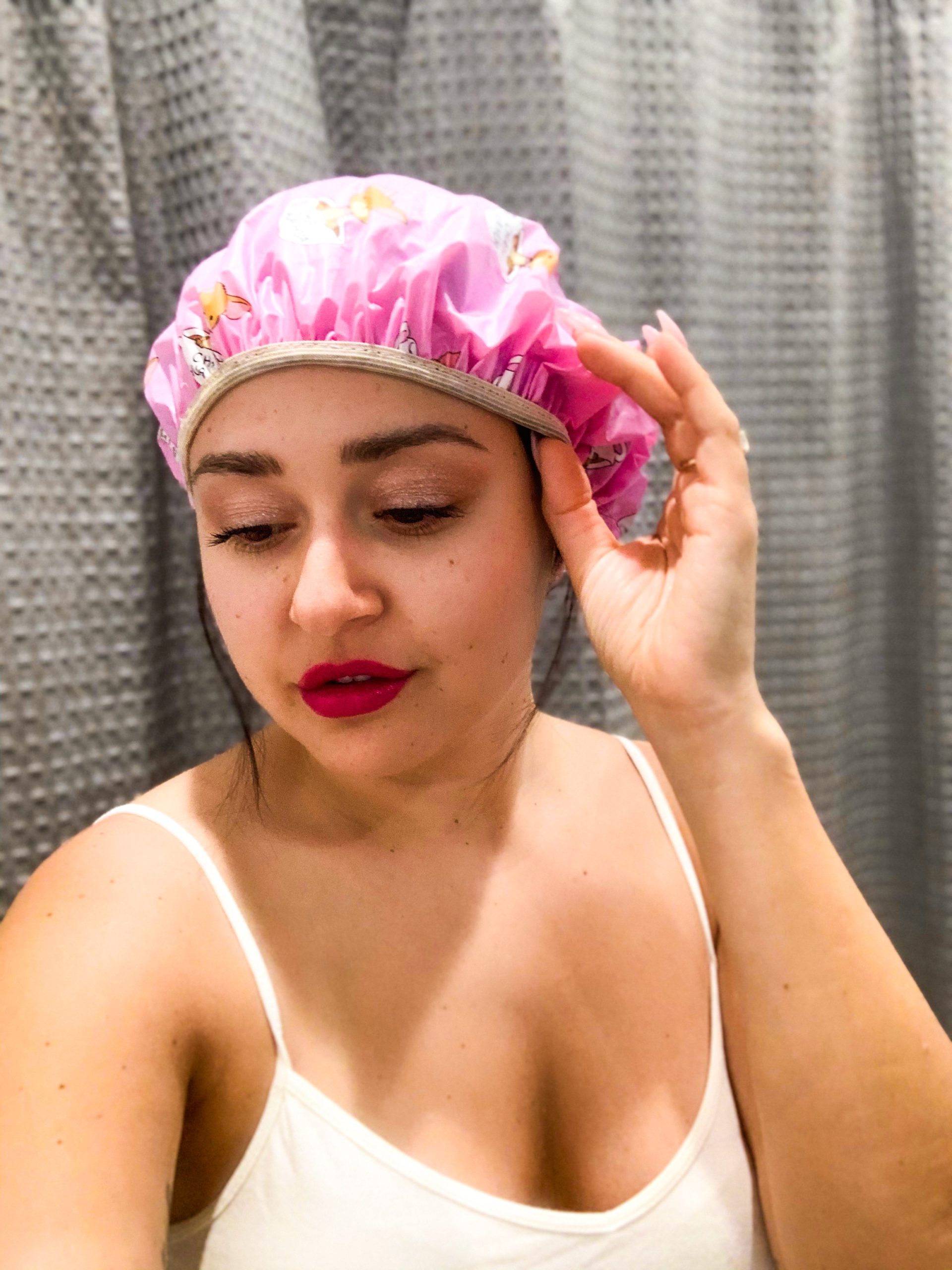
For me personally, this saves a ton of time and effort, so my blowout or style is lasting me until I wash my hair again. I wrap my hair in a hair towel or shower cap before getting in the shower.
But if you don’t blow-dry or style your hair, then it doesn’t matter as much. In fact, you may actually be able to go longer if you rinse your hair on non-wash days, because the water is pulling some of those oils down and out. This is usually what I suggest for men to skip days, as long as they aren’t using heavy styling products.
4. How often should you condition your hair?
Overall, you should condition your hair every time you wash it. On the days that I don’t shampoo, I don’t even get it wet. I’ve heard some clients say that they condition their hair on the days they don’t wash, which is fine and all, but it’s not necessary.
Doing this can actually make your hair feel excessively greasy, needing to wash it sooner than if you hadn’t conditioned it in between. You also still need to dry and style it when doing this, which can cause unnecessary damage.
The natural oils will condition your hair all it needs. After all, that’s why we produce oil to begin with!
Now, as far as conditioning your hair when you do wash it, focus the shampoo on your scalp (I don’t even apply shampoo to my ends, it gets pulled through as it’s rinsed), and focus the conditioner on your ends.
Applying a lot of conditioner to your scalp will create the need to wash your hair sooner. That doesn’t mean to avoid it entirely, just don’t heavily saturate your scalp with conditioner. I suggest starting on your ends and working your way up.
Conclusion
Remember that everyone is different, and just because your friend can go a week without washing, that may not be the best routine for you.
Fine, thin, or short hair will need to be washed more often than thick, coarse, or long hair. This is because there is less hair to absorb the oil.
Those with active lifestyles that live in a humid climate will also need to wash more frequently than those who don’t sweat often or live in a dry climate.
You can extend your time between washes by blow-drying your hair, brushing your scalp with a boar brush, using dry shampoo, and using medicated scalp products.
If you have any further questions for me on how often to wash your hair, be sure to leave them for me in the comment section. And as always, Have A Good Hair Day!
share item


Comments