
How To Tell If Your Hair Is Damaged: Improve Your Hair’s Condition
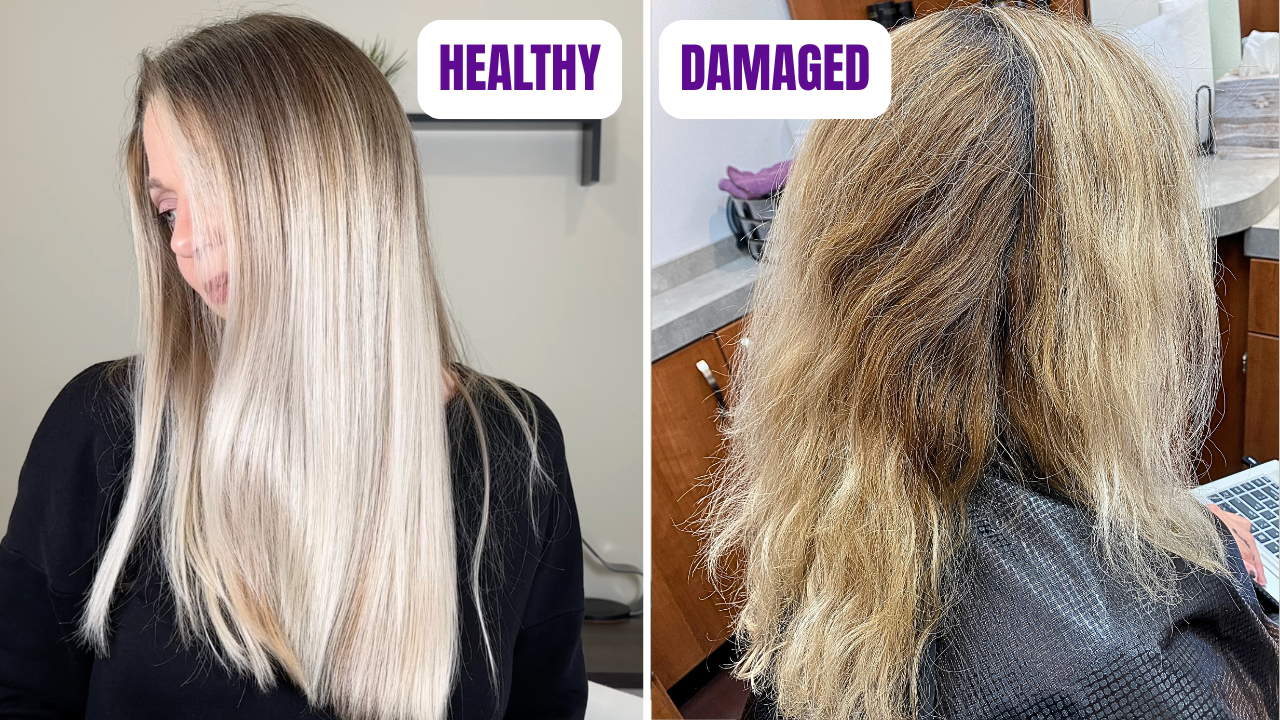
Have you ever wondered how to tell if your hair is damaged, or how damaged your hair actually is? In this post, I’ll show you the signs to look for so you can determine what condition your hair is in, from healthy hair to slightly damaged to significantly damaged. I’ll also explain what you can do to improve the condition of damaged hair and prevent it from getting worse.
I’ve experienced both ends of the spectrum with my own hair. I used to have damaged hair that couldn’t seem to grow past my shoulders, and now I have bleached hair that is extremely healthy and very long. As a hairstylist, I’ve learned that having bleached hair doesn’t automatically mean it has to be unhealthy. The condition of your hair depends entirely on how you care for it.
The 3 Levels of Hair Damage
Not all damaged hair is damaged to the same degree. Your hair can range from healthy and relatively free of damage to significantly damaged, and knowing where your hair falls can help you determine how it should be cared for.
I’ve broken hair condition down into three levels: healthy hair, slightly damaged hair, and significantly damaged hair. Keep reading to see which category best describes your hair.
***Since I’m sharing the products that I love to use with you guys, this page includes affiliate links to these products. If you take action and purchase a product through clicking one of my links, I’ll make some commission money from it at no extra cost to you. This enables me to be able to continue giving you awesome hair tips, so thanks! ***
1. Healthy Hair
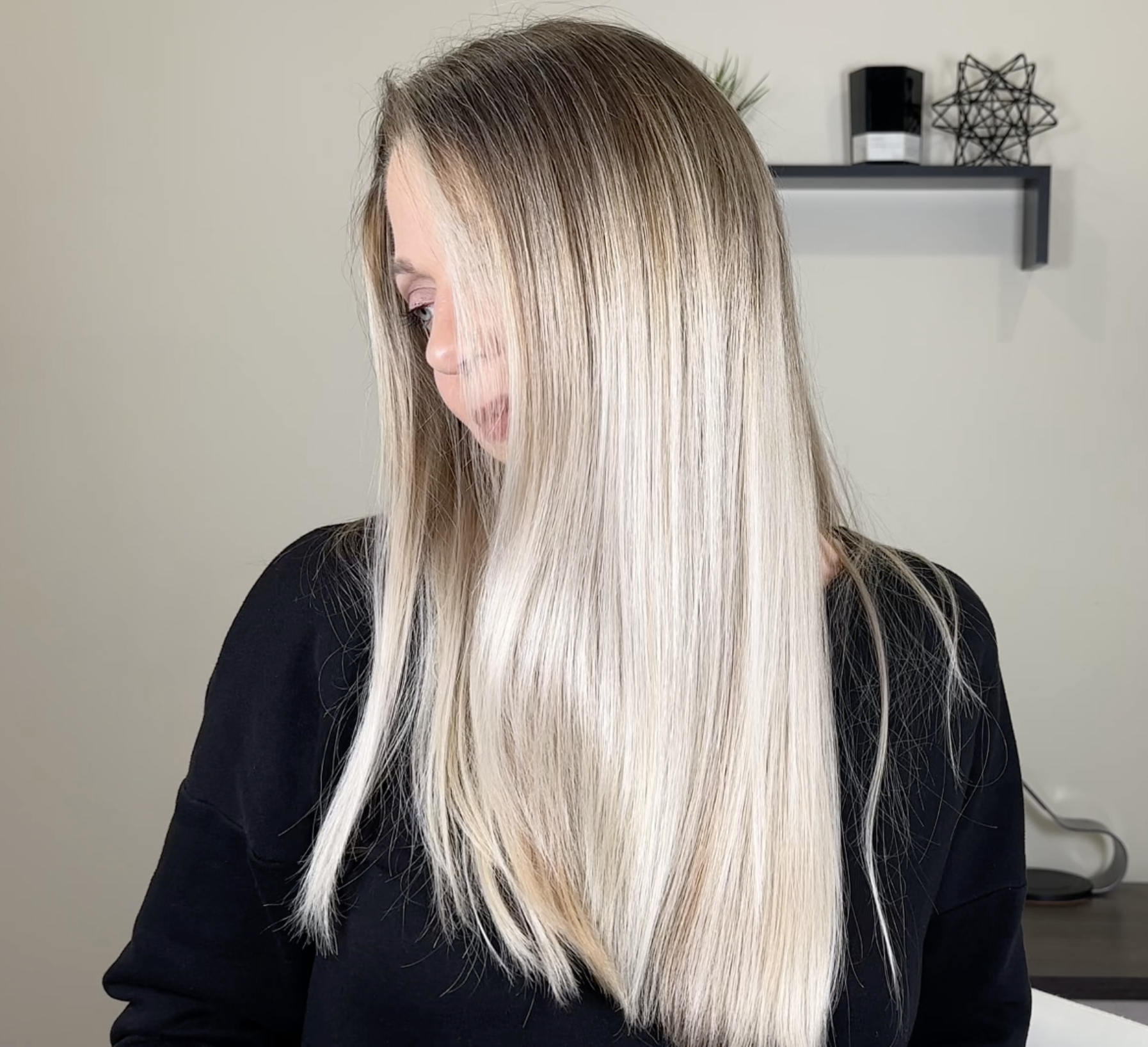
Healthy hair is in its best condition possible. You can have virgin hair without it necessarily being healthy, and you can also have healthy hair without it being virgin. Virgin hair simply means that it has never been chemically treated, so no color, perms, or relaxers unless they have completely grown out and been cut off.
This category is for hair that is both healthy and lacking noticeable damage.
Signs your hair is healthy:
- Minimal/no breakage
- Smooth cuticle throughout (no frizz)
- Hair reflects light & shines
- Feels soft and smooth to the touch
- No flyaways traveling up the hair
- Ends are full and healthy
- Natural wave pattern intact
The biggest issue you may notice with healthy hair is having a hard time achieving volume and/or body. Because the hair is so smooth and moisturized, it may just want to lie flat. Volumizing products or adding layers and texture can help if this is a problem for you.
Key takeaway: Healthy hair has little to no visible damage. Virgin hair can be healthy, but virgin hair isn’t automatically healthy.
2. Signs of Slightly Damaged Hair
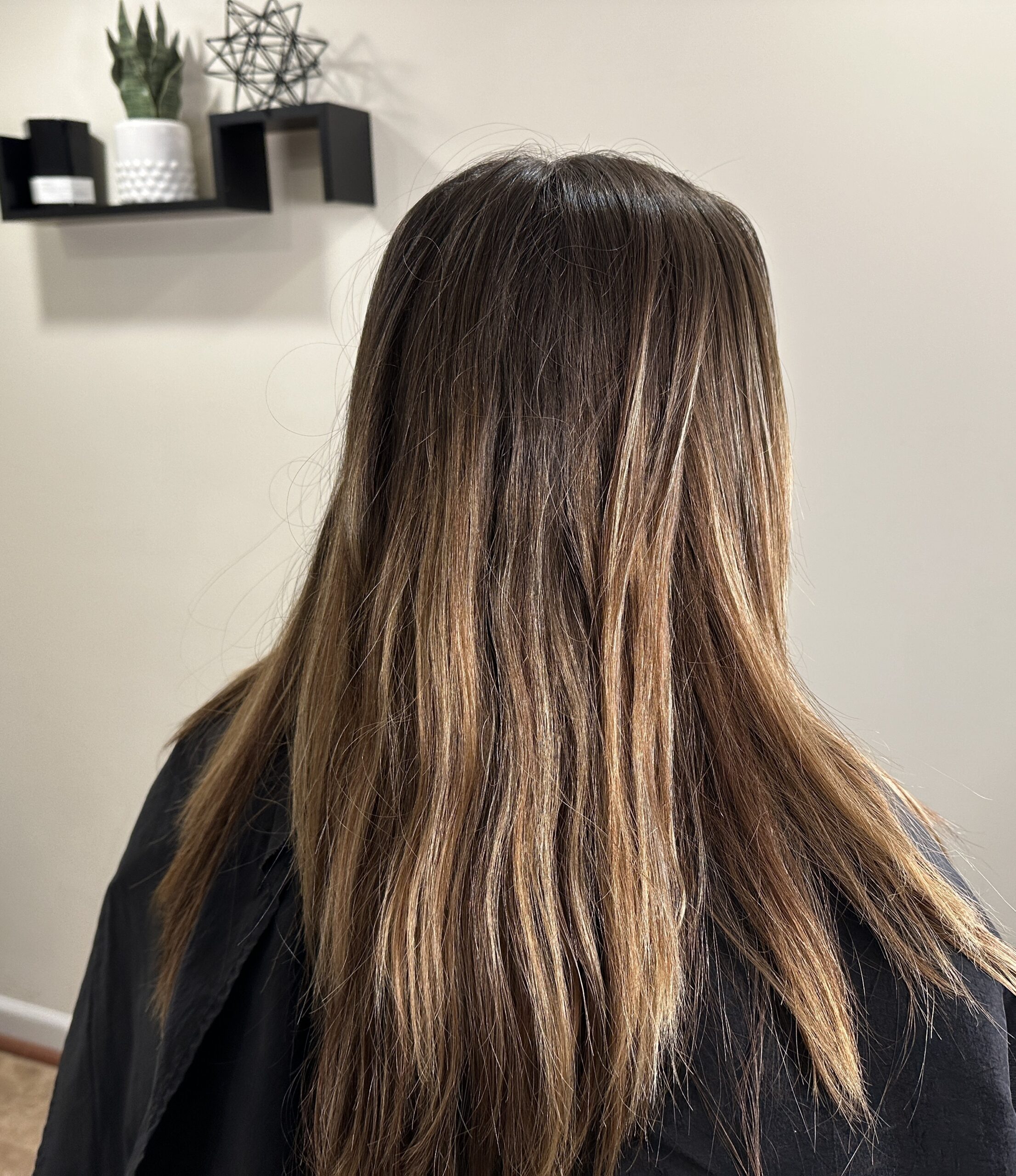
If you have chemically treated hair or you use an iron frequently, then this section may be for you. While a little bit of damage is expected when coloring, bleaching, or frequently using heat on your hair, the hair should still appear to be in good shape.
Hair with slight damage can still look relatively healthy, but you may start noticing changes in how your hair looks, feels, or behaves.
Signs your hair has slight damage:
- Some split ends, particularly toward the bottom
- More noticeable dryness or frizz
- Hair doesn’t feel as smooth as it used to
- Shine is reduced
- Hair tangles easier
- Natural wave pattern may be reduced
The important distinction with this category is that the damage is still relatively limited. If you have significant flyaways traveling up the hair, your hair has lost its wave pattern, or the bottom several inches of your hair are straggly and frizzy, skip to the next section on significantly damaged hair.
This is a good point to start paying closer attention to your routine. Slightly damaged hair can become significantly damaged if you continue doing things that are causing damage without taking steps to protect it.
Key takeaway: Slightly damaged hair may still look fairly healthy, but there are noticeable signs that its condition has declined. Catching the damage at this stage allows you to prevent it from becoming worse.
3. Signs of Significantly Damaged Hair
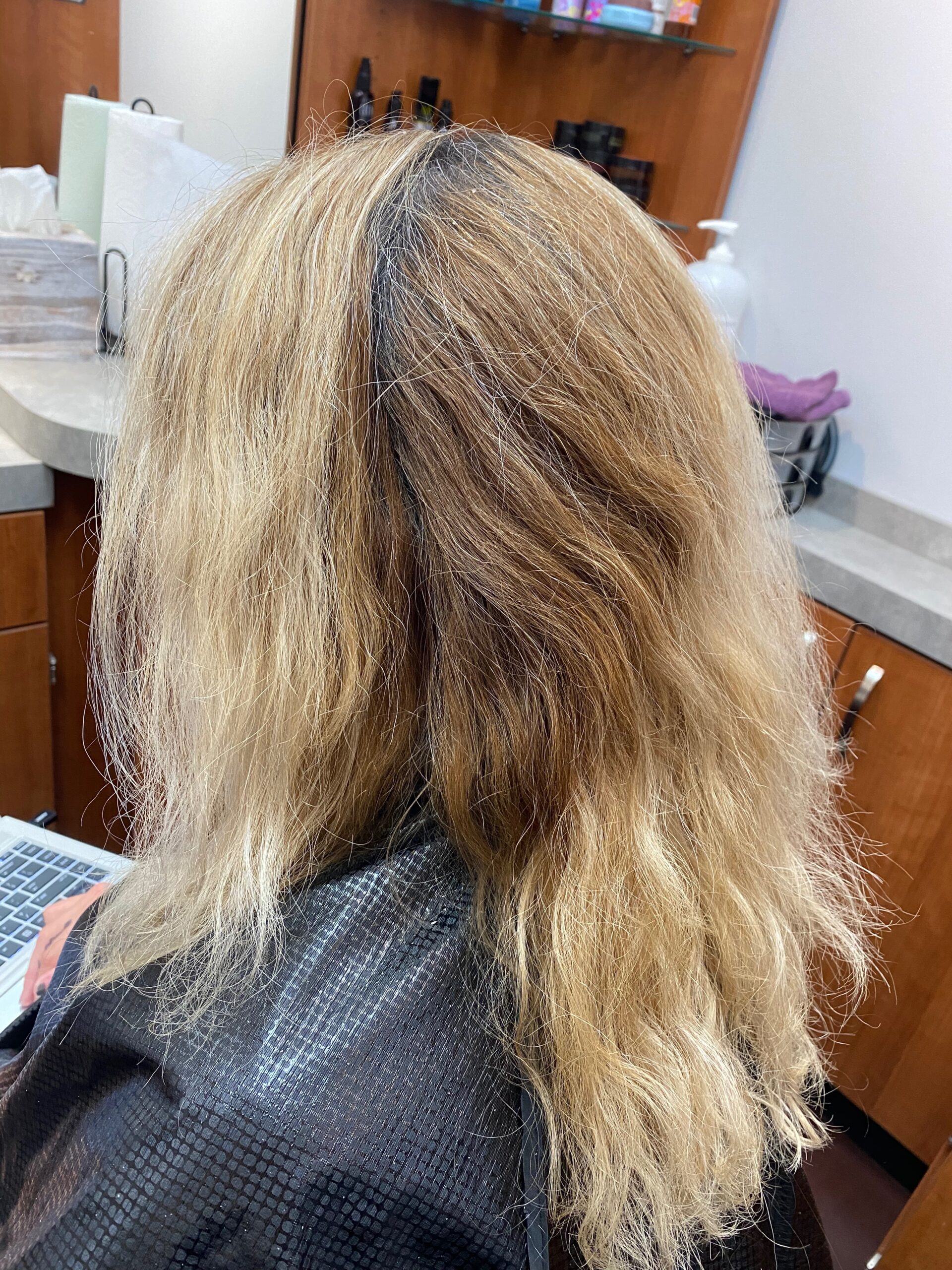
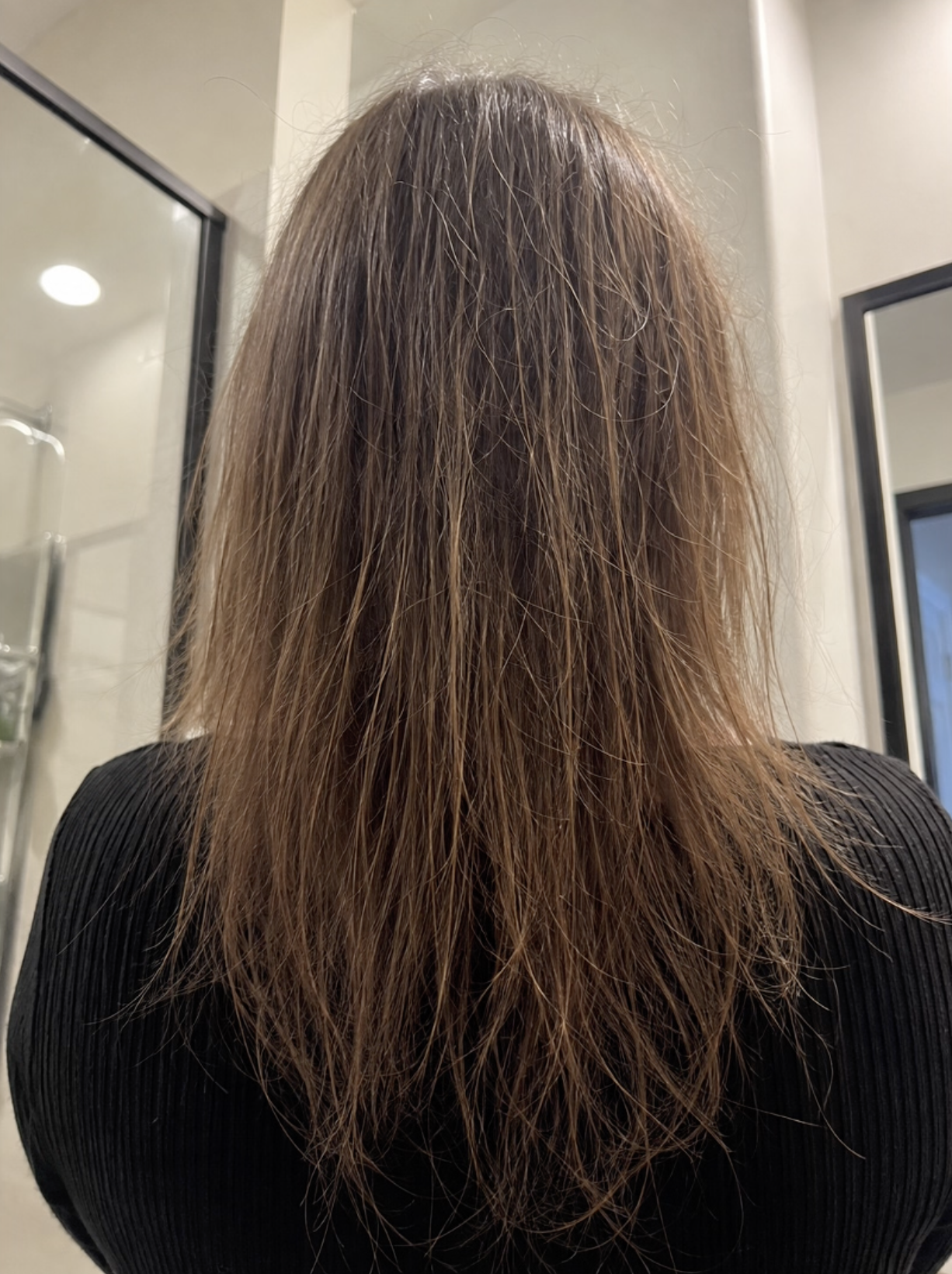
If you’ve experienced significant damage from bleaching/stripping, other chemical treatments, or excessive heat, you may fall into this category.
When hair is significantly damaged, the changes are usually much more noticeable. The damage may extend beyond the ends and affect its overall appearance, texture, and manageability.
Signs your hair is significantly damaged:
- Flyaways traveling all the way up throughout your entire hair
- Extensive splitting, breakage, and uneven ends
- Hair looks straggly and thinned out
- Hair is dull with no shine
- Frizz throughout and hair feels rough or “crunchy” to the touch
- Wavy or curly hair may become straight or limp
- Hair sucks color up very dark and cool initially
- Hair has difficulty holding onto moisture or color
- Broken hair lands all over your shirt when you brush it
When the damage has progressed this far, the ends may be so damaged that it can feel like your entire hair is a split end. Hair that was previously wavy or curly may also become much straighter when it’s in poor condition.
Significantly damaged hair has a missing or extremely damaged cuticle, which allows moisture and color to slip out of the hair very quickly.
At this point, maintaining your hair’s current condition isn’t enough. You’ll want to focus on preventing additional damage by avoiding color and/or heat tools entirely and deep conditioning it every wash to improve the condition of the hair you have.
Key takeaway: Significantly damaged hair has obvious signs of damage that can extend well beyond the ends. Changes in texture, splitting, flyaways, frizz, and difficulty maintaining moisture or color can all indicate that your hair is in poor condition.
How to Improve the Condition of Damaged Hair
Now that you know how to tell if your hair is damaged, the next step is figuring out how to improve damaged hair and prevent the condition from getting worse.
The more damaged your hair is, the more important it becomes to pay attention to your routine and how you treat it.
- Get regular haircuts or trims to remove damaged ends.
- Use professional-grade hair products designed to strengthen & moisturize your hair while avoiding harsh additives.
- Use two thermal protectants, one before you blow-dry, and a second if you’re going to iron.
- Reduce how frequently you use an iron. If you need to use heat, blow-drying is better for your hair than ironing.
- Avoid unnecessary tension from tight ponytails, hair ties, headbands, and styles like messy buns.
- Be gentle & start at the ends when brushing, particularly when your hair is wet.
- Use a boar bristle brush to detangle hair when it’s dry; never use nylon or brushes designed for wet hair.
- Use a mask or conditioning treatment regularly. Significantly damaged hair should deep condition every single time hair is washed.
- Protect your hair from the sun, pool, & ocean when spending significant time outdoors.
- Wash your hair only as frequently as necessary to avoid drying it out further.
For more detailed advice, check out my guides on:
- 10 Best Products to Repair Damaged Hair and Prevent Breakage
- How To Grow Your Hair Out Without Breakage
- The Top 10 Causes Of Hair Breakage & How To Stop It
Can Damaged Hair Become Healthy Again?
Technically, damaged hair can’t be repaired back to its original, completely healthy condition. Hair that has broken off unfortunately can’t regrow from the ends. However, this doesn’t mean that you’re stuck with hair that looks or feels damaged forever.
With the right routine, you can improve the look and feel of damaged hair, making it feel healthier, become more manageable, and look better while preventing the damage from getting worse.
The goal is to condition the damaged hair while also protecting the new, healthy hair as it grows in. Over time, trimming away the damaged ends while being mindful of your habits can help get your hair back into much better condition relatively quickly.
Final Thoughts
Knowing how to tell if your hair is damaged can help you understand what your hair actually needs instead of simply assuming that dry, frizzy, or difficult-to-manage hair is all the same.
Having color or bleach on your hair doesn’t automatically mean that it’s unhealthy. I’ve had damaged hair that couldn’t grow past my shoulders, and I now have bleached hair that is extremely healthy and very long. The difference is in how you care for your hair and how you prevent additional damage.
You can’t completely repair hair that has already been damaged, but you can improve its condition, make it feel and look better, and protect your new growth as your hair grows out. Once you know if your hair is actually considered damaged or not, you can make better choices about how to care for it moving forward.
Leave me any questions you have on how to tell if your hair is damaged in the comments below, and make sure you subscribe if you want to make every day a good hair day!
share item


Comments