

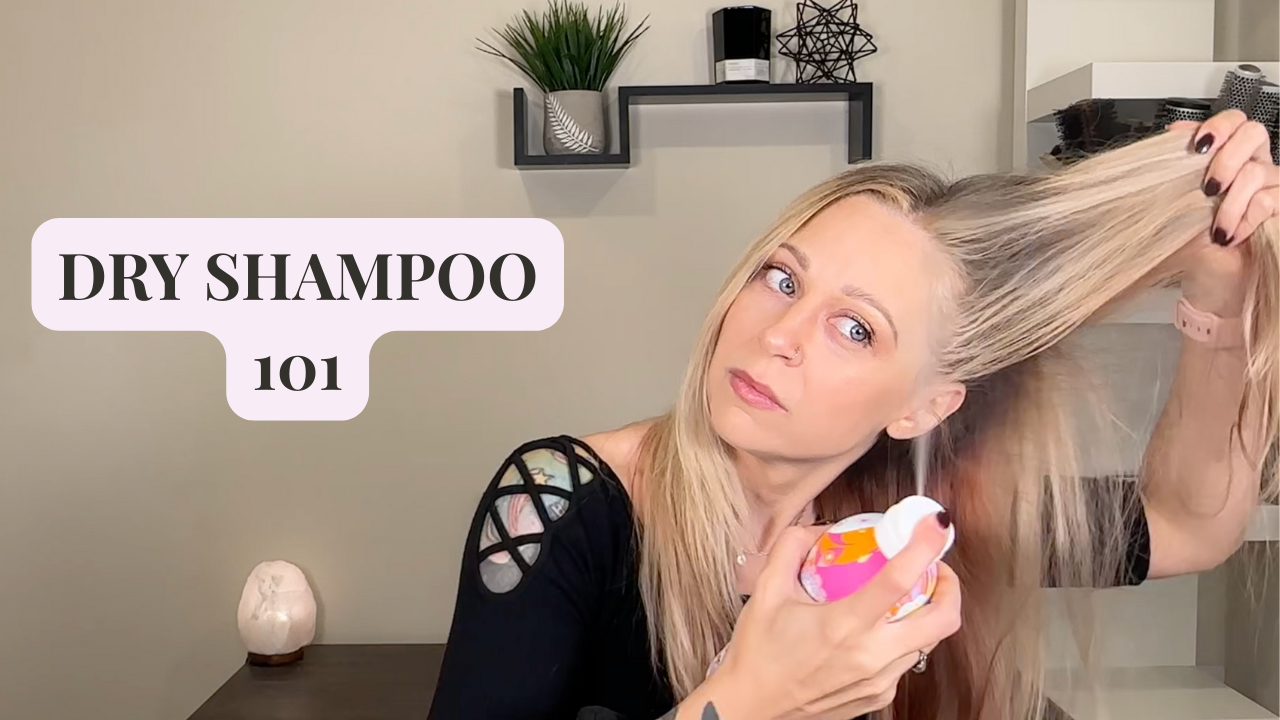
Dry Shampoo: How to Use It, Pros & Cons, and If It’s Bad for You
Dry shampoo can be a lifesaver for busy mornings or days you want to stretch out washing your hair, but there’s more to it than spraying it in your hair once it’s greasy. In this post, I’ll cover how to use dry shampoo properly, its pros and cons, the different types of dry shampoo, and whether it’s actually bad for your hair or not.
As someone with naturally oily hair, I used to think I had to wash my hair every single day. I also got to the point where I was going weeks without washing my hair and ended up running into some consequences. But once I learned how to use dry shampoo the right way, everything changed. Now, it’s one of my favorite hair tools. So let’s talk about what dry shampoo actually does, how to make it work for you, and when it might be doing more harm than good.
What is dry shampoo & how does it work?
Dry shampoo was designed to absorb oil from your hair to extend the amount of time between washing without your hair looking greasy. It comes in an aerosol can, but sprays a powder, not a liquid.
It’s meant to be left in the hair rather than being rinsed out like a typical shampoo. The powder absorbs oil and neutralizes odor, but that doesn’t mean that the oil has been removed from your hair. It’s just not visible any longer.
Before dry shampoo was around, people used to use baby powder for the same effect. The difference is that dry shampoo has been formulated specifically for applying to hair, so it doesn’t create build-up or leave as much of a powdery residue.
Is dry shampoo good for your hair?
So this question is a tricky one, because no, it does not contain any conditioning, repairing, or reconstructive properties.
BUT that being said, our scalp produces natural oil for a reason. It keeps our hair and scalp healthy and moisturized. And since that oil is still present (just not visible) when we use dry shampoo, it’s keeping our hair moisturized instead of drying it out with regular shampoo.
It also stops you from over-doing things that cause damage to your hair, like shampooing (dries hair out), blow-drying, and ironing (heat damage). So if dry shampoo helps you avoid further damage, then I would say YES, it is good for your hair.
After we talk about the benefits and how to use it, we’ll cover whether it can be bad for your hair and address some claims against it.
Dry shampoo benefits:
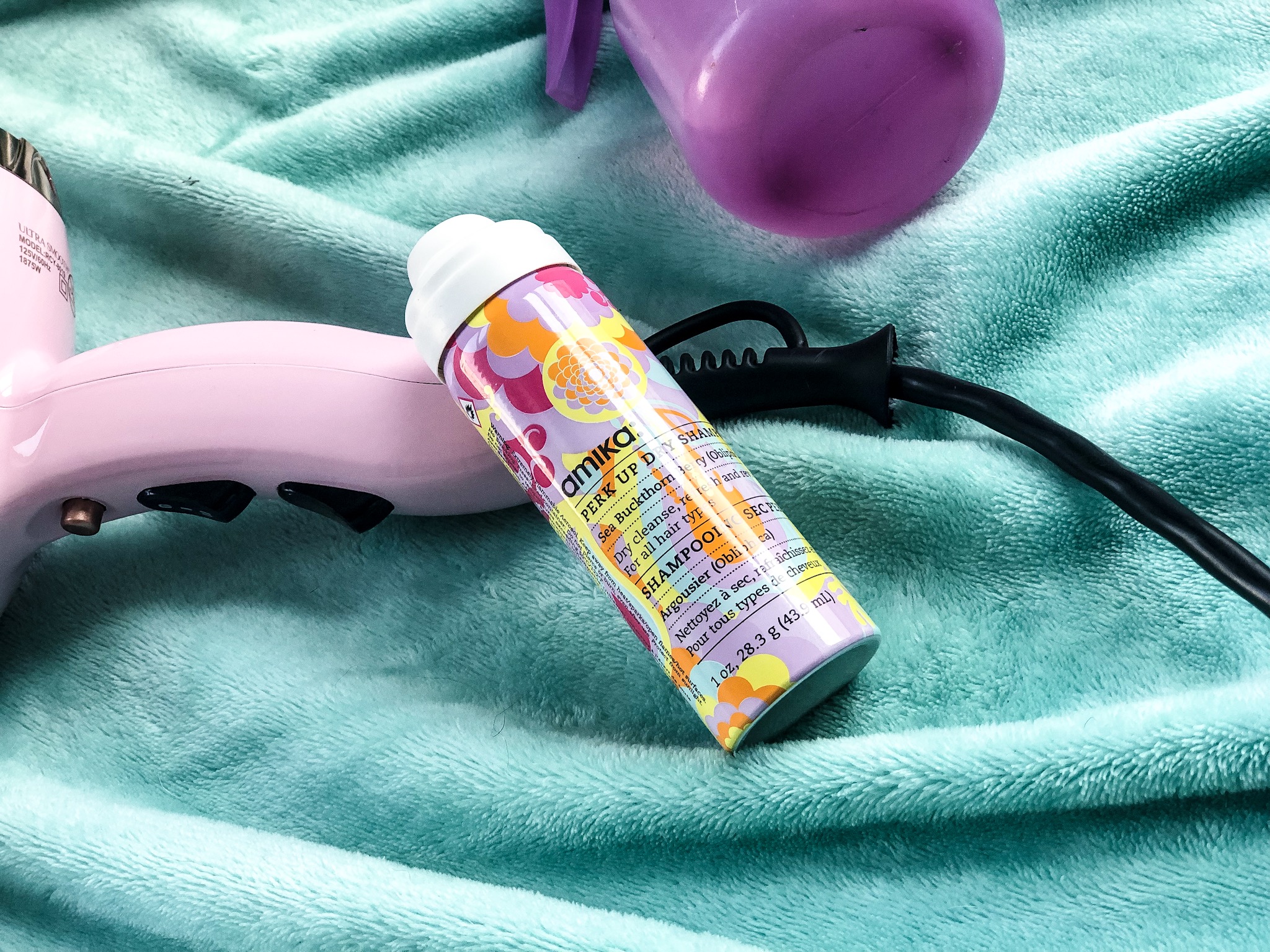
1. It absorbs oil
The main purpose of dry shampoo is to absorb the natural oil from your hair that your scalp produces. It diminishes the appearance of greasy or dirty hair.
You’re generally able to go AT LEAST an extra 2-4 days without even wetting your hair with the use of dry shampoo. Everyone has different amounts of hair, produces different amounts of oil, and lives different lifestyles, so some may be able to go longer than others.
To learn how often YOU should be washing your hair, see this post here.
2. It saves you time
I don’t know about you, but washing my hair is a hassle because it takes so much time and effort. I even end up planning my social events around it.
“If I wash my hair on Thursday, then I won’t need to wash it for my entire vacation”.
How nice does that sound? 90% of the time when I go on trips, I don’t need to wash my hair while I’m there. It takes only a few minutes to brush it out, and depending on how I’m styling it, 5-15 minutes total.
With dry shampoo you don’t even have to wet your hair, so that saves you from shampooing, conditioning, blow drying, and ironing. It adds up, especially if you’re running late in the morning.
On the days that I do wash my hair, I typically end up adding an extra 1-2 hours onto my morning routine. I could not imagine having to do that every single day!
3. It neutralizes odor
By absorbing the oil and sweat that causes bacteria to grow, dry shampoo helps to keep any funky odors at bay. Some contain added fragrances, others don’t.
Now, I can’t guarantee that it will take out the campfire smell from your hair if you were sitting by a fire pit all night long. So if that’s the case, then you are probably better off washing it.
But if you’re concerned about your hair smelling strictly because you haven’t washed it in a few days, then don’t worry, you’re covered.
4. Dry shampoo increases color longevity
Yep! Dry shampoo will help your hair color last longer. This is strictly because when you use it, you aren’t washing your hair nearly as frequently.
Regular shampoo and warm/hot water will fade hair color even if you’re using a professional-grade, sulfate-free, color-safe shampoo. Unfortunately, there’s no avoiding it completely. Each time you wash your hair, your color fades a little bit.
So if you’re spending the money to get your hair colored, you’ll want to get the most out of it. And dry shampoo helps make that possible.
5. It keeps hair healthy
We already briefly covered this earlier, but when you wash your hair, you’re stripping it of natural oils that are needed in order for it to stay healthy and moisturized. When you use dry shampoo, the natural oils are still present; they just aren’t as visible.
And aside from just over-washing, it also stops you from using heat tools on it as frequently. When you don’t shampoo, you don’t need to wet or blow-dry your hair. Other than maybe a few small touch-up passes with your iron, you can skip the heat tools altogether.
6. Dry shampoo adds volume
I often hear clients with fine or thin hair tell me that they need to wash their hair frequently because blow-drying gives them volume. And yes, that makes sense, because the natural oils that your scalp produces can weigh fine or thin hair down.
But instead of washing, try using dry shampoo. It actually increases volume because the starch ingredients cover your hair and add texture. As it’s absorbing the oil that weighs it down and being thickened by the texture, your hair will get twice as much volume.
You can even use it on day 1 hair just to get some extra volume or texture. Sometimes when your hair is too clean, it’s silky and weighed down. So using dry shampoo on day 1 can give you that lived-in, undone and textured look from the start.
How to use dry shampoo for best results
***Since I’m sharing the products that I love to use with you guys, my posts may include affiliate links to these products. If you take action and purchase a product by clicking one of my links, I’ll make some commission money from it at no extra cost to you. This enables me to be able to continue giving you awesome hair tips, so thanks! ***
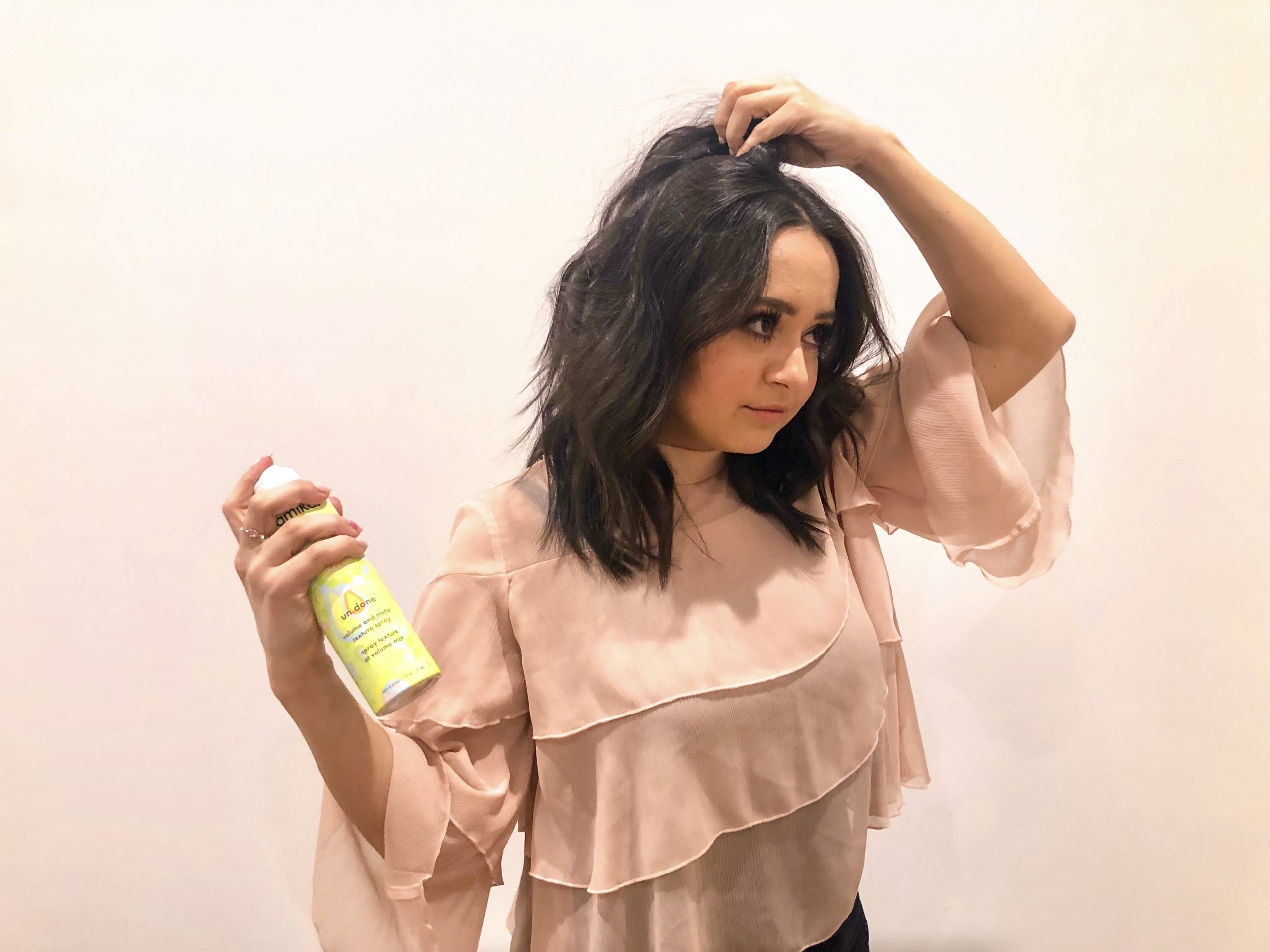
To use, shake up the can to mix the ingredients, hold it 8-10 inches away from your head, and spray it at your root area. A little goes a long way, and I would start with less and add more as needed.
Once you spray, rub it into your hair with your fingers until there’s no more oil or powder appearance; brush it out with a boar bristle brush, style, and wah-la! No rinsing needed, it stays in until you shampoo again.
Boar brushes work better at distributing the oil and dry shampoo than nylon or plastic bristles do, so the bristle type is actually pretty important here. I like to use the brush against my scalp as well as an excellent exfoliator.
How often should I use dry shampoo?
As far as what days to use dry shampoo on, that number varies from person to person, and it may not even be the same from week to week or in different seasons.
I have found that you’ll get maximum longevity if you start using it on day 1. I use it immediately after my hair is dried and then each day after until I shampoo again, but another common method is to use it on the night of day 1 before bed.
Being proactive like this helps stop the oil from becoming a problem to begin with. If I only use it when I begin to look oily, let’s say day 2 or 3, then I usually can’t go quite as long between shampoos.
I have also found that I can go longer between washes with dry shampoo in the winter, and I still need to wash more often in the summer. This is due to sweat, since you’re sweating more in the summer, the dry shampoo won’t go as far.
If you have a ton of hair, you’ve probably found that you can go a good amount of time between shampoos. But if you have thin hair, then you likely have to wash more often. This is because hair absorbs oil as well, so the more hair you have, the more time you can go without washing it.
The Best Dry Shampoo For Your Hair Type
Not all dry shampoos are created equally. Some are light, some are strong, and some are even tinted.
If you’re a brunette, you may have found that you have a hard time finding a dry shampoo that doesn’t leave a white residue in your hair. This is where tinted dry shampoos come in! These also help for those with gray roots; it can double as a root concealer. Though it won’t give you full coverage, it will help mute the harshness.
Alternatively, as a platinum blonde, I have actually found that regular dry shampoo will help minimize my dark roots and make them not as harsh.
And in the summertime, I need to use a stronger dry shampoo than I do in the wintertime because I’m sweating more. So below, I’ll list my favorite dry shampoos and highlight their benefits.
Olaplex 4D Dry Shampoo (Light)
Currently, this is my favorite dry shampoo. It’s so light, you really can’t feel it in your hair. That being said, if you are extremely oily, it might not be strong enough, especially during the summertime.
Since I’m a very oily person and I work out regularly, I mostly use this dry shampoo in the winter.
Amika Perk-Up (Medium)
This dry shampoo has been the number one dry shampoo on the market for years. It smells amazing, does its job, and doesn’t leave any sticky residue feeling in your hair like some other lines do.
It is a little bit heavier than the Olaplex one mentioned above, so if that one was too light for you, this would be my next recommendation.
Amika Perk-Up Plus (Extended Days)
Since taking the world by storm with their original dry shampoo, Amika has since come out with a few other options. This one is designed to help you further extend your days between washes.
This is ideal if you’re going on a trip or may have a medical issue, like being in the hospital, stopping you from being able to wash your hair.
Amika Perk-Up Ultra (Extra Oil Control/Strong)
Their final dry shampoo is formulated for naturally oily-haired people, like me! This is the strongest dry shampoo I have ever used, which can be good for some or bad for others.
I usually use this in the summertime when I’m extra sweaty, but I find it feels like a bit much in the winter. If you don’t mind the feeling of dry shampoo in your hair and are mostly concerned with maximum oil control, this is your best option.
Batiste Dry Shampoo Dark (Tinted For Dark Hair)
If you’re a brunette and have found that regular dry shampoo leaves a white residue in your hair, or you’d like one that offers some gray coverage benefits, this one is your go-to.
Personally, I have never used this one because I’m a blonde, but I’ve had clients who loved it.
Is dry shampoo better for your hair than washing it?
This is a pretty popular question! The answer is that they each serve their own purpose.
While shampooing too frequently is not good for your hair because it dries it out, you do need to shampoo it from time to time. Your scalp needs to be exfoliated, and if sweat is not removed, it can cause dandruff and flakes.
The amount of time between washes varies based on how much oil is produced, how much you sweat, and what products you’ve used since you last washed your hair.
Dry shampoo is not meant to replace washing your hair completely. It is merely meant to extend the time between washes.
Is dry shampoo bad for your hair?
If you are completely replacing your regular shampoo with dry shampoo, that can cause a number of problems. This can include dandruff or scalp breakouts because your hair follicles become clogged. You can also create buildup on your hair if you don’t remove the oil and dry shampoo often enough.
But this is not due to the dry shampoo itself; it’s because you are avoiding washing your hair. I typically don’t recommend going more than a week without shampooing, but again, this varies from situation to situation.
Typically, using a boar bristle brush to exfoliate your scalp and properly distribute the dry shampoo will alleviate the cause of buildup or clogged hair follicles.
I also recommend using scalp products simultaneously and thoroughly. Check out my post here if you have noticed any scalp issues from skipping shampooing.
Some dry shampoos also may contain a fragrance, which can be irritating to some or even trigger allergies. If you are aware of a sensitivity to perfumes or fragrances, then be sure to get a fragrance-free dry shampoo.
Does dry shampoo cause cancer?
Recently, I’ve heard of numerous claims that dry shampoo causes cancer. And while there aren’t any studies that have directly linked the use of dry shampoo to cancer, many dry shampoos do contain benzene.
Benzene is a chemical that is found in some dry shampoos, sunscreens, and other beauty products, and is suggested to be a carcinogen. There is a battle of the experts out there, and it’s impossible to find a definitive answer on this, pertaining to dry shampoo in particular.
Some say to stop using sunscreen and dry shampoo; others say that the exposure to benzene from using dry shampoo would be so incredibly low that the risk of it causing cancer is basically non-existent.
The dry shampoos that I’ve listed above supposedly don’t contain benzene. But I have seen similar worded ingredients like “benzonate” on the bottle. I’m not here to tell you that dry shampoo does or does not cause cancer. I want to present you with the claims so that you can do your own research on this topic.
Conclusion
Adding dry shampoo to your hair care routine can be life-changing. The benefits include:
- Absorbs oil
- Saves time
- Neutralizes odor
- Increases color longevity
- Keeps hair healthy
- Adds volume and body
To get the best results, it’s recommended to start using dry shampoo on day 1 after washing and blow drying your hair. This will help you to avoid getting greasy to begin with, instead of trying to erase the oil with the product.
Dry shampoo is not meant to replace shampooing, but instead increase the time between shampoos.
Dry shampoo can be a total game-changer when it’s used the right way. It helps you stretch your wash days, saves time, and keeps your hair healthy by cutting down on heat and overwashing. But like most things, moderation is key. As long as you’re still cleansing your scalp regularly and not using dry shampoo as a full replacement for washing, it can absolutely be a healthy part of your hair routine.
Personally, I can’t imagine life without dry shampoo. It’s what helps me get through busy weeks without feeling like a greaseball by day two. Just remember to choose one that fits your hair type, use it proactively instead of reactively, and always make sure your scalp gets the care it needs too.
If you’re new to dry shampoo or trying to figure out which one’s right for you, scroll back up to the recommendations I shared earlier; they’re the best I’ve found after years of testing.
Leave a comment below of your favorite dry shampoo! And subscribe below if you want to make every day a good hair day!
share item


Comments